
Introduction
Step inside the Tokyo Nights sumo London event at Greenwich Borough Hall, a rare chance to experience an authentic live sumo event in the UK without getting on a plane to Japan. In this vlog-style guide, I take you through the full Japanese cultural experience in London — from the buzzing queue outside and the first glimpse of the dohyo, to the final thunderous clash that shakes the hall. Along the way, I’ll show you what really happens at the Greenwich sumo event: traditional sumo rituals explained in simple terms, close-up moments with the wrestlers, and the electric atmosphere as the crowd reacts to every bout. It’s more than just watching big hits; it’s a deep dive into respect, ceremony, and the unique rhythm of live sumo. Because no Tokyo-inspired night is complete without food, I also explore the Japanese food experience London style, including grabbing a karaage bento and a mixed seafood bento between matches, plus a look at the stalls and snacks on offer. And if you’re into filming your own nights out, I break down exactly how I captured it all with an Insta360 Luna Ultra vlog setup, so you can see how it performs in low light, fast action, and crowded spaces. If you’ve ever wondered whether a Tokyo Nights sumo London event is worth it, what to expect from live sumo in the UK, or how to film an immersive vlog at an indoor venue like this, keep scrolling — this post walks you through every moment, from the first drumbeat to the last bow.
Arriving at Tokyo Nights
The queue wrapped around the building as fans waited to enter. The excitement started before stepping inside.
Arena Transformation
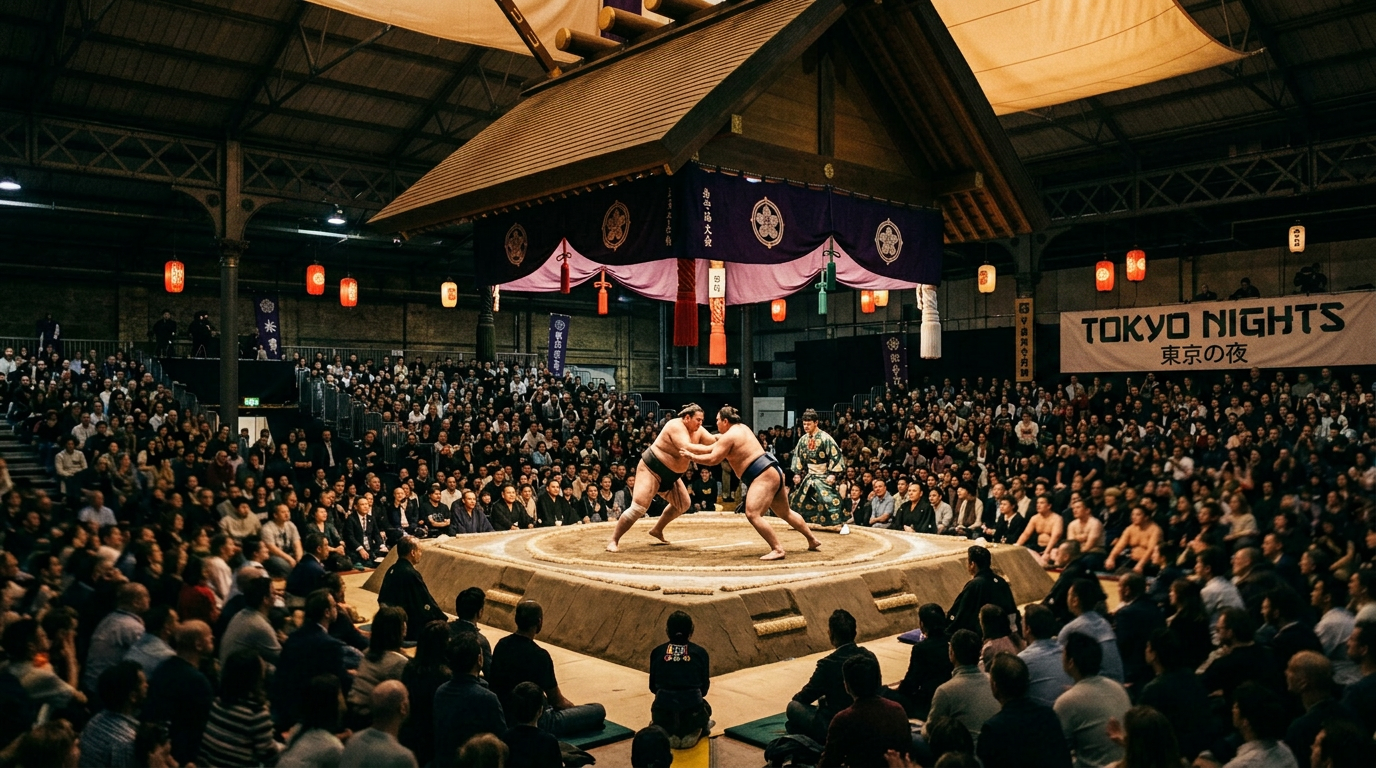
Inside, the hall was completely transformed into a Tokyo‑style sumo arena, with the central floor raised into a dramatic clay‑colored dohyo, encircled by roped boundaries and low, ring‑side seating. Overhead, fabric banners and stylized noren curtains in deep reds, blacks, and golds hung from trusses, echoing the atmosphere of a traditional Japanese stadium. Lanterns and soft, amber spotlights washed the space in a warm glow, while focused beams framed the ring to heighten the sense of anticipation before each match. Around the perimeter, shoji‑inspired panels, faux wooden beams, and printed cityscapes of Tokyo’s neon streets blended classic sumo aesthetics with a modern urban edge. Subtle ambient soundscapes of distant crowds and temple bells played beneath the music, and the scent of incense at the entrance completed the illusion, making guests feel as though they had stepped directly into a night of championship sumo in the heart of Tokyo.
Japanese Food Experience
The pre-match experience at Tokyo Nights extended far beyond the ring. Guests collected their pre-ordered bento boxes and settled in to enjoy authentic Japanese cuisine before the first matches began, turning dining into an essential part of the cultural immersion. Two standout options dominated the menu: the KARAAGE Bento and the Mixed Seafood Bento, each a masterclass in Japanese culinary tradition and presentation. The KARAAGE Bento was a celebration of crispy, golden perfection. This beloved Japanese comfort food features bite-sized chunks of tender chicken marinated in a savory blend of soy, ginger, and garlic, then deep-fried to a crackling finish. At Tokyo Nights, the karaage arrived piping hot, each piece coated in a shatteringly crisp exterior that gave way to impossibly juicy meat inside—a textural contrast that defined every bite. The chicken was generously seasoned without being overwhelming, allowing the natural umami flavors of the marinade to shine through. Alongside the karaage sat silky white rice, perfectly steamed and just slightly warm, ready to absorb the rich juices from the fried chicken. The bento also included fresh pickled vegetables: tangy umeboshi (pickled plum), pale cucumber slices with a subtle brine, and vibrant pickled ginger that cut through the richness of the fried elements. A small container of peppery yuzu mayo provided an optional flavor boost—bright, citrusy, and creamy all at once. The presentation followed classic Japanese bento principles: each component had its designated space in the compartmentalized box, creating visual balance and ensuring flavors remained distinct until the moment of tasting. Eating the karaage bento between matches became a ritual: the satisfying crunch of chicken skin, the comfort of warm rice, and the palate-cleansing zip of pickled vegetables all contributed to an experience that felt simultaneously indulgent and refreshing. The Mixed Seafood Bento told a different story—one rooted in Japan’s deep maritime heritage. This elegant box showcased the ocean’s bounty with surgical precision. At its center was a generous portion of sushi rice, slightly seasoned with vinegar and a whisper of sugar, providing a gentle sweetness and subtle tang. Arranged atop and around the rice were several varieties of fresh seafood: silky slices of sake (salmon) with that characteristic buttery texture and delicate pink hue, succulent ebi (shrimp) with its tender, slightly sweet bite, and glossy strips of maguro (tuna) ranging from pale pink to deep red depending on the cut. Each piece had been sliced with precision, thick enough to showcase the integrity of the fish but thin enough to melt on the tongue. Complementing the raw fish were a few pieces of tamago (egg omelet)—slightly sweet, bouncy, and impossibly smooth. The bento included crisp nori (seaweed) sheets, a small mound of fresh wasabi with real grassy heat, and a shallow well of low-sodium soy sauce for dipping. Edible shiso leaf and vibrant microgreens added color and a subtle herbal brightness. What struck diners most was the freshness: every component tasted like it had been prepared mere hours before, with the seafood possessing that unmistakable clean, oceanic flavor that can only come from premium-grade fish. Eating this bento required a moment of respect—the minimalist presentation and quality ingredients demanded appreciation rather than speed. Each bite was an exercise in restraint and perfection. The experience of eating these bento boxes at Tokyo Nights transcended mere dining. Sitting in the arena, surrounded by the hum of anticipation, the scent of incense, and the theatrical lighting of the dohyo, each bite became a multisensory event. The warmth of the karaage bento contrasted beautifully with the cool, delicate seafood of its counterpart. First-time visitors found themselves oscillating between comfort and discovery—the familiar satisfaction of crispy fried chicken balanced against the elegant minimalism of sushi-grade seafood. The Japanese concept of *shokunin* (craftsperson’s mastery) was evident in every element: from the way each bento was assembled to the careful selection of supporting ingredients that elevated rather than overwhelmed the stars. The pacing of the meal aligned naturally with the event’s rhythm, with lulls between bouts providing time to enjoy another bite, another sip of the complementary green tea, another moment to absorb the spectacle unfolding mere feet away. For visitors unfamiliar with Japanese cuisine, these bento boxes served as an accessible entry point into authentic flavors. The KARAAGE Bento offered comfort and familiarity (fried chicken is universally beloved), while the Mixed Seafood Bento introduced the delicate, refined side of Japanese food culture. Together, they created a gastronomic narrative that mirrored the philosophy behind sumo itself: respect for tradition, attention to detail, and the pursuit of perfection in every component. By the time the final match concluded, the empty bento containers sat alongside memories of golden-fried perfection, pristine seafood, and the unique joy of eating Japanese food in a space steeped in Japanese ceremony. It was more than a meal; it was a cultural bookmark in an unforgettable evening.
Testing the Insta360 Luna Ultra
Testing the Insta360 Luna Ultra at the Tokyo Nights sumo event was the perfect way to see what this camera can really do. I spent the evening capturing the arena, the dramatic spotlights over the dohyo, and the constant buzz of the crowd, all in some seriously challenging low light. The Luna Ultra’s low-light performance held up well: colors from the banners and ring looked rich, skin tones stayed surprisingly natural, and there wasn’t as much noise as I expected for an indoor arena. Stabilisation was a big highlight too — even weaving through the stands, climbing steps, and reacting to sudden throws, the footage stayed smooth and watchable without that “jelly” wobble. I switched between different lens options to match the mood: an ultra-wide view to show the full arena and crowd energy, then a tighter field of view to lock in on the wrestlers and their pre-bout rituals. The ultra-wide was great for immersive shots, but for fast-paced sumo clashes, the narrower view helped keep the action centered and more cinematic. Filming indoors came with its own set of challenges: harsh contrast between bright spotlights and darker seats, constant crowd movement, and unpredictable bursts of action that you only get one chance to catch. The Luna Ultra handled exposure shifts fairly quickly, though in the most extreme lighting, highlights sometimes clipped around the brightest spotlights. Tracking the wrestlers during sudden rushes and throws also pushed the stabilisation to its limit, and in a few moments the motion looked a bit too smoothed-out, almost like it was fighting my quick pans. Overall, the footage quality out of the Insta360 Luna Ultra was impressive for vlogging this kind of live event. It delivered clean, detailed shots with smooth motion and immersive perspectives that really captured the energy of Tokyo Nights sumo. If you’re into vlogging or creating event recaps, this camera feels reliable for low light, fast action, and run-and-gun shooting, as long as you’re aware of its limits with extreme lighting and very sudden movements.
Host Welcome & Format Explanation
Host Richie Valera introduced the event and explained how the tournament would run.
Sumo Rituals Explained
Shiko, Shikiri, and Chiri‑Chōzu rituals were performed with rich commentary explaining not only what was happening, but why these movements matter so much in sumo. First came Shiko, the powerful leg‑stomping exercise that is one of the most iconic sumo rituals. Each wrestler slowly raised a leg high into the air and then brought it crashing down into the dohyo, again and again, in a steady rhythm. Traditionally, this movement is believed to drive away evil spirits lurking around the ring and to purify the ground before the bout. Shiko also shows off the wrestler’s balance, flexibility, and leg strength, all essential for success in the ring. As the stomps echoed through the venue, the audience at Tokyo Nights could feel the physical power of each impact and sense the quiet seriousness behind what might first look like a simple warm‑up. The commentary explained how this ritual connects to Shinto ideas of cleansing a sacred space before an important event. Next was Shikiri, the intense pre‑bout ritual where the wrestlers crouch, face each other, and repeatedly rise and return to their corners. During Shikiri, they stare each other down, adjust their belts, throw salt to purify the ring, and slowly build mental focus. This back‑and‑forth can last several minutes in professional sumo, all about testing the opponent’s nerve and preparing the mind and body for collision. At Tokyo Nights, the crowd watched as the tension rose with each return to the starting lines. Even without understanding the language, newcomers could feel the psychological battle unfolding — a mix of discipline, patience, and intimidation. The commentary linked this to Shinto values of respect and ritual order, explaining that the match is not just a fight, but a carefully structured ceremony. Finally, the wrestlers performed Chiri‑Chōzu, the distinctive hand‑clapping and arm‑spreading gesture done at the edge of the ring. Facing the dohyo, they brought their hands together in a single, sharp clap, then opened their arms wide, palms outward, before returning to a ready stance. The clap is a traditional Shinto way of calling the attention of the kami (spirits or deities), while the open hands show that the wrestler carries no weapons and intends to fight with honor. In ancient times, sumo was performed as an offering to the gods, and this gesture still echoes that origin. For the Tokyo Nights audience, this moment felt almost like a pause in time — the noise of the crowd dipped, the clap cut through the air, and the open‑armed stance gave a clear, visual signal that something sacred was about to begin. Together, these three rituals — Shiko, Shikiri, and Chiri‑Chōzu — turned each match at Tokyo Nights into more than just a physical contest. They created a sense of ceremony and connection to Japan’s Shinto traditions, inviting even first‑time viewers into the deeper spiritual and cultural world behind sumo.
First Clash — Tachi‑ai
The breath sync, the tension, and then the explosive first clash that kicked off the tournament.
Final Bout & Winner Announcement
The final match delivered intensity, technique, and a roaring crowd.
Useful Links / Gear / Affiliates
- Amazon Storefront – https://amzn.to/3EyR0Pv
- Opus Clip – https://www.opus.pro/?via=a12fbc
- Smarty Mobile – https://i.smarty.co.uk/j1Bk5cx
- vidIQ – https://vidiq.com/VlogLife247
- Octopus Energy – https://share.octopus.energy/great-sun-494
- Microsoft Rewards – https://rewards.bing.com/welcome?rh=1F24A150&ref=rafsrchae
- Wise – https://wise.com/invite/arhc/paulwilliame2
Leave a Reply