
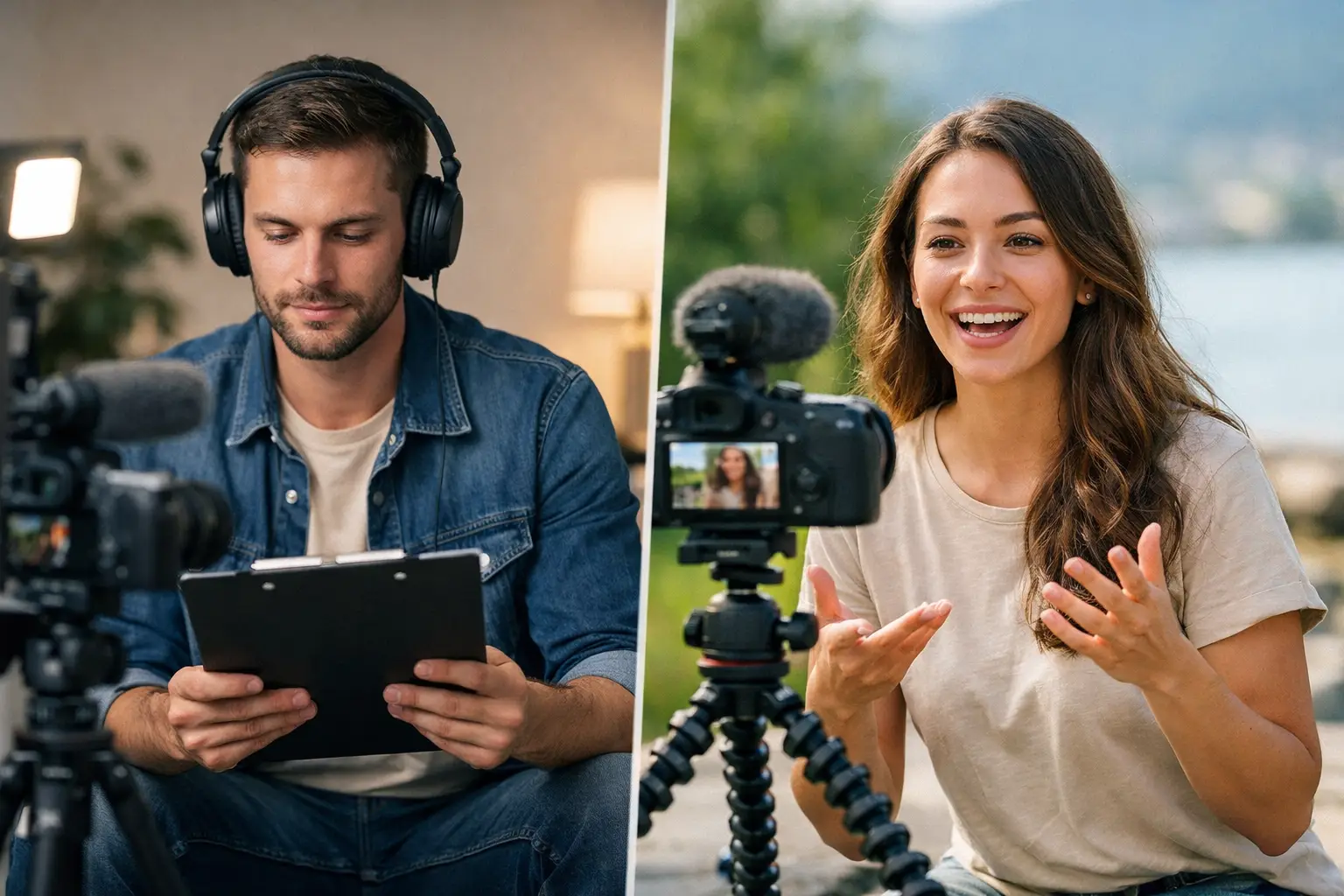
A food spot can look brilliant in a carefully planned video, then leave you wondering what it is actually like on a busy Saturday. A scooter can sound powerful in a polished review, but the useful bit is how it handles potholes, rain and the walk up to your flat. That is where the difference between scripted vs unscripted vlogs really matters.
Neither format is automatically better. A script can make a video clearer and less of a ramble. An unscripted vlog can capture the moments no one could plan: the queue outside a new café, a wrong turn on a day out, or the honest reaction when a product does not do what the box promised. The best choice comes down to what you are filming, what your viewers need, and how much of the real experience needs to stay on screen.
What a scripted vlog does well
A scripted vlog starts with a plan. That might be a full word-for-word script, but more often it is a list of talking points, shots and facts to cover. You know the opening, the main message and the ending before you press record.
This approach works especially well when viewers need straightforward information. A product review may need to cover price, specifications, charging time, range, safety features and who the item is for. A travel video might need opening times, ticket costs, transport options and a realistic idea of how long to allow. Planning those points means the useful details do not get lost between clips of coffee and scenery.
Scripts also help when you are filming in noisy or busy places. If you have one chance to record outside a popular restaurant, at a community event or next to a main road, knowing what to say saves time. It makes editing easier too. You are less likely to come home with forty minutes of footage and realise you never explained why the place was worth visiting.
There is nothing fake about preparation. A clear structure respects the viewer’s time. If someone is looking up a practical review before spending their money, they should not have to wait eight minutes to hear the one thing they came to find out.
Where scripts can go wrong
The problem starts when a vlog sounds like it was written to sell rather than show. Viewers can spot a forced reaction quickly. If every meal is ‘the best ever’, every hotel is ‘incredible’, and every product has no downside, the video stops feeling useful.
A tight script can also make a real place feel oddly empty. Local food spots have character. They have a rush hour, an awkward parking situation, friendly staff, slow service on a packed day, and menu items that are better than others. Those details are often what people genuinely want to know.
Scripted content needs room to breathe. Leave space for the unexpected, even if the rest of the video is planned.
Why unscripted vlogs build trust
Unscripted vlogs are led by what happens on the day. You might have a rough idea of where you are going, but you let the experience set the pace. The camera catches first impressions, small problems, changing weather, conversations and honest reactions as they happen.
For lifestyle content, that can be far more revealing than a neat presentation. If a market is quieter than expected, show it. If a restaurant is lovely but the portion size disappoints, say so. If a product is good overall but has taken a week to get used to, that is valuable context, not a flaw to edit out.
This is why unscripted footage suits real-use reviews so well. A product can look perfect in a studio, but daily life asks different questions. Does it fit in the boot? Is it annoying to carry upstairs? Does the battery last after a few weeks? Is the app easy to use when you are standing outside in the cold? Real answers tend to appear while you are actually using the thing, not while reading a spec sheet.
Unscripted videos also give viewers a sense that they are there with you. That matters for travel, days out and local discoveries. A perfectly framed landmark is nice. Seeing the route to get there, the crowd level and the slightly confusing entrance is often more helpful.
The downside of filming everything as it happens
Honesty alone does not make a good vlog. A completely unplanned video can become repetitive, unclear or far too long. Viewers may enjoy a natural moment, but they still need a reason to keep watching.
Unscripted filming creates more work in the edit. You need to find the story afterwards, cut dead space, check facts and make sure your point is clear. There is also a difference between unfiltered and careless. A rushed first impression is not always a fair review, especially with products that need charging, setup or longer-term use before they can be judged properly.
Being honest means giving things enough time. If you do not know yet, say that. ‘This is my first-day impression’ is much more trustworthy than acting certain too soon.
Scripted vs unscripted vlogs for food, travel and reviews
The format should match the subject rather than follow a rule. Food vlogs often benefit from a loose plan and a real reaction. You can prepare the basics – where the place is, what it serves, how much you spent – then let the tasting and atmosphere stay natural. There is no need to pretend a reaction is spontaneous if you have already tried the dish, but there is also no need to read a restaurant description like an advert.
Travel and outing vlogs need a similar balance. Plan the route, costs and key places you want to cover. Then keep the real journey in. If public transport is delayed, the weather turns or a place is more crowded than expected, those moments help someone planning the same trip. They show the experience as it is, not as a brochure wishes it looked.
Product reviews need the most structure because buyers are looking for answers. Start with a simple framework: what you used, where you tested it, what worked, what did not, and who it would suit. Within that structure, unscripted footage is your proof. Show the actual setup, the real ride, the storage issue, the charging routine or the feature that became irritating after a few days.
A good review does not need to be harsh to be credible. It just needs to be specific. ‘The battery is decent’ tells viewers very little. Explaining how you used it, what conditions you faced and what you got from it is far more useful.
The strongest approach is usually a hybrid
Most vlogs do not need to choose one extreme. The most watchable and trustworthy format is often planned around real moments.
Before filming, decide what a viewer should know by the end. For a food video, that could be what to order, what it costs and whether the visit is worth the journey. For a day out, it might be the practical route, the real atmosphere and whether it works for families, couples or solo visitors. For a review, it should be what the product is like after genuine use, not just what the manufacturer claims.
Then film enough natural footage to answer those questions honestly. You can record a short introduction afterwards if the original opening was messy. You can add a voiceover to explain a price or correct a fact. That is not cheating. It is organising the experience so people can get something from it.
The key is not to edit away every imperfection. Keep the moments that change the verdict. A long wait may matter. A surprise extra cost may matter. A small issue with a product may be the deciding factor for somebody watching. Leave in what helps people make a better choice.
How to keep a vlog real without letting it drift
Think of a script as a map, not a set of handcuffs. Have a beginning, a few points you must cover and a clear takeaway. Once you are there, let the day happen.
Ask yourself a simple question while filming: what would I want to know if I were spending my own money or giving up my own Saturday for this? That question keeps the focus on real value. It stops a vlog becoming a highlight reel and stops it becoming a ramble for the sake of being ‘authentic’.
At Vlog Life 247, the aim is simple: Real Vlogs. Real Places. Real Reviews. Sometimes that means a planned piece to make the facts clear. Sometimes it means leaving in the awkward bit, the unexpected win or the honest disappointment. Viewers do not need perfection. They need enough of the real experience to decide whether it is right for them.
The next time you film, plan the information people need, then make room for the truth that only shows up once you are actually out there.
Leave a Reply