
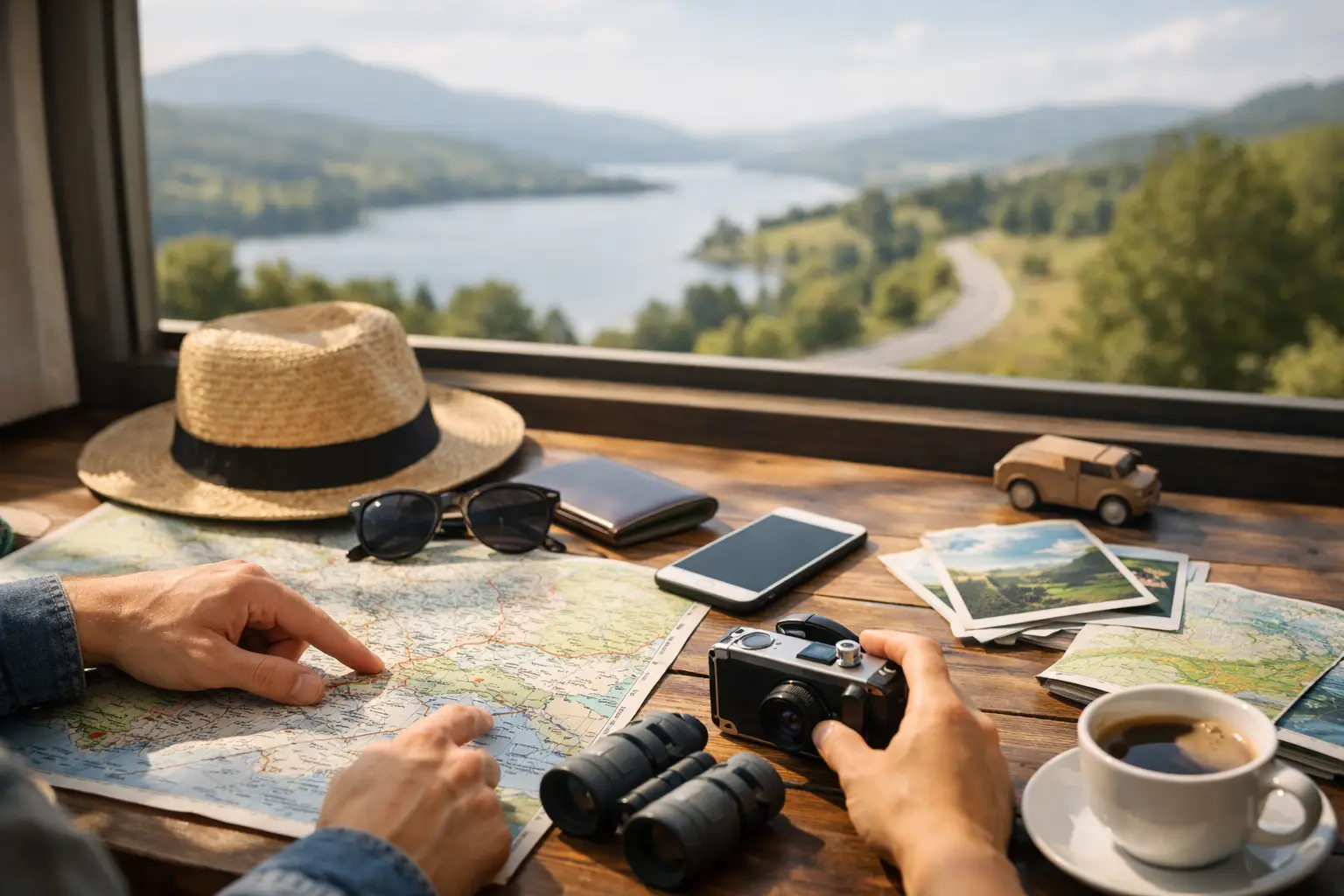
A good day out can be ruined before you have even left the drive. You pick five places, book lunch somewhere miles away, underestimate the traffic, then spend the day checking the time instead of enjoying it. Knowing how to plan a daytrip is less about building the perfect itinerary and more about making realistic choices that leave room for the unexpected.
That could mean a queue at a popular food spot, a road closure, rain arriving earlier than forecast, or simply finding somewhere you want to stay longer. The best trips have a loose plan behind them, but they never feel like a military operation.
Start with one proper reason to go
Before opening a map, decide what the day is actually about. Is it a coastal walk and fish and chips? A market, museum and a wander around town? A food mission to try one place you have seen online? Or is it a drive out to film a local event and see what else is about?
Pick one main reason, then build around it. This is the bit people skip when they try to squeeze a whole county into one Sunday. A daytrip works best when it has a clear centre. If the main plan is a visit to a farm shop, do not add a beach two hours away just because it looks good on a map.
A useful test is this: if every extra stop disappeared, would the day still feel worth taking? If the answer is yes, you have got your anchor. Everything else is a bonus.
Choose a destination that fits your actual day
A destination may look close in miles but take much longer than expected. Country lanes, weekend traffic, rail changes and hunting for parking all add time. For a straightforward day out from home, aim for somewhere you can reach in roughly 60 to 90 minutes each way. You can travel further, of course, but be honest about what that does to the rest of the day.
If you are relying on public transport, check the final journey home before you get excited about the first one there. A beautiful town is less relaxing when the last train leaves at 17:20 and the station is a 25-minute walk from where you have eaten.
Driving gives you flexibility, but it comes with its own realities: petrol, parking charges, traffic near attractions and the chance that the car park is full by late morning. Public transport can remove the parking headache and means everyone can have a drink with lunch, but it can limit where you go and when you leave. Neither option is automatically better. Pick the one that makes the day easier for your group.
How to plan a daytrip around time, not wishful thinking
The mistake is not having too many ideas. The mistake is assuming every idea will take exactly as long as it says online.
Work backwards from the time you want to be home. If you want to be through the door by 7pm, and your journey takes 90 minutes, aim to leave the destination by 5pm. Then factor in lunch, your main activity, a second smaller stop and proper travel time between each one.
Give yourself more slack than feels necessary. An attraction might take an hour, but that does not include finding the entrance, using the loo, taking photos, looking around the gift shop or deciding where to go next. A 15-minute drive can turn into 35 minutes on a busy Saturday.
For most daytrips, one main activity and one or two flexible extras is plenty. You might visit a castle in the morning, have lunch at a local independent café, then choose between a nearby walk, antique shop or viewpoint depending on the weather and your energy. That feels like a full day without the constant rush.
Try to arrive earlier than you think you need to, especially at popular spots. A calm start makes a huge difference. You can grab a coffee, get your bearings and avoid starting the day already annoyed by queues.
Check the boring details before they become the whole story
The unglamorous checks are usually what save the day. Confirm opening times directly before setting off, especially for small independent venues, seasonal attractions and places visited on bank holidays. Some locations shut earlier than expected, need timed entry, or have limited kitchen hours even when the building remains open.
Also check whether you need to book. A museum may be fine to walk into, while the restaurant you were looking forward to is fully booked until 4pm. If food is a key part of the trip, reserve a table where possible. If you prefer to keep things spontaneous, have two nearby backup options rather than gambling everything on one viral spot.
Parking deserves a quick look too. Find out whether there is a car park, how much it costs, whether payment is by app, and what the nearest alternative is. Rural locations are particularly worth checking. “Parking available” can mean a tiny lay-by that fills up by 10am.
Weather matters, but do not let a weather app make every decision for you. A light shower can be managed with decent footwear and a waterproof. Strong wind can make a clifftop walk miserable, and heavy rain can make an outdoor market a very different experience. Make a simple Plan B before you leave: a pub lunch, gallery, cinema, covered market or nearby town centre can rescue the day without turning it into a disappointment.
Make food part of the plan, not an emergency
Food is often one of the best bits of a daytrip, but it is also where poor planning shows up fast. Leaving lunch until you are starving at 2:30pm usually means settling for whatever is nearby, over-priced or already shutting its kitchen.
Decide early what role food plays. If you are travelling for a specific café, bakery or local restaurant, book it and plan the rest of the day around that time. If the food is secondary, keep the schedule open but know where the decent options are.
Take water and a small snack even if you have lunch booked. It sounds basic, but a cereal bar in your bag can stop a delayed meal turning everyone grumpy. This matters even more with children, long walks and destinations where shops are thin on the ground.
When filming or taking photos, give yourself time to eat the food while it is still hot. Real experiences are better when you are actually present for them, not trying to record every second while your chips go cold.
Pack for the trip you are taking
You do not need to carry half the house for a day out, but a few practical items make things easier. A charged mobile phone and power bank are useful for maps, bookings, tickets and photos. Bring a reusable water bottle, a light waterproof, sunglasses and comfortable shoes that suit the ground rather than the outfit.
If you are driving, keep a mobile phone cable in the car and do not leave with the fuel light already on. If you are using public transport, screenshot key tickets and train times in case signal drops out. For a walk, bring an extra layer even in summer. The weather on a seafront, hill or open field can feel very different from the weather outside your front door.
For vloggers and casual creators, keep the gear realistic. Take the camera or phone setup you will genuinely use, plus spare battery power and something to protect it from rain. A huge kit bag can make a simple wander feel like work. The point is to capture the day as it happens, not to spend it setting up shots.
Leave room for the bits you did not plan
The best part of a daytrip is often not the big attraction. It might be a tiny record shop you noticed on the high street, a local stall selling something you have never tried, a view from a side road, or a conversation with somebody who tells you where the locals actually eat.
That only happens when your schedule has breathing room. If every hour is booked, any unexpected find becomes a problem. Build in an hour where nothing has to happen. Walk without a destination, sit with a coffee, browse, or head home early if the day has already delivered what you came for.
There is no prize for exhausting every option. A day out that ends with you saying, “We should come back and do that next time,” is often better than one where you technically saw everything but enjoyed very little.
Keep the budget honest
A daytrip can be cheap, but it is rarely free once you add it all up. Think beyond entry tickets. Include fuel or fares, parking, food, drinks, snacks, tolls, souvenirs and the occasional impulse purchase. You do not need to strip the fun out of it, just know what you are comfortable spending before the day starts.
If you are watching the pennies, choose one thing to spend on properly. Maybe that is a great lunch, a paid attraction or train travel that saves stress. Bring a picnic for the rest, find free walking routes, and avoid buying several forgettable coffees because no one packed water.
The same goes for “worth it”. A place can be expensive and still be worth it if it gives you a memorable few hours. It can also be cheap and disappointing if you have travelled too far for very little. Real value comes from the whole experience, not just the ticket price.
The night before, check the route once more, charge your mobile phone, put your shoes and waterproof by the door, and set a leaving time you can actually stick to. Then let the day unfold a little. The strongest daytrips are not the ones that look busiest online. They are the ones where you come home with a full camera roll, a decent story and the feeling that the day was genuinely yours.
Leave a Reply