
Reviews have a new home. I’m moving my product reviews from Vlog Life 247 to Vlog Life Reviews. Subscribe there for my latest reviews.
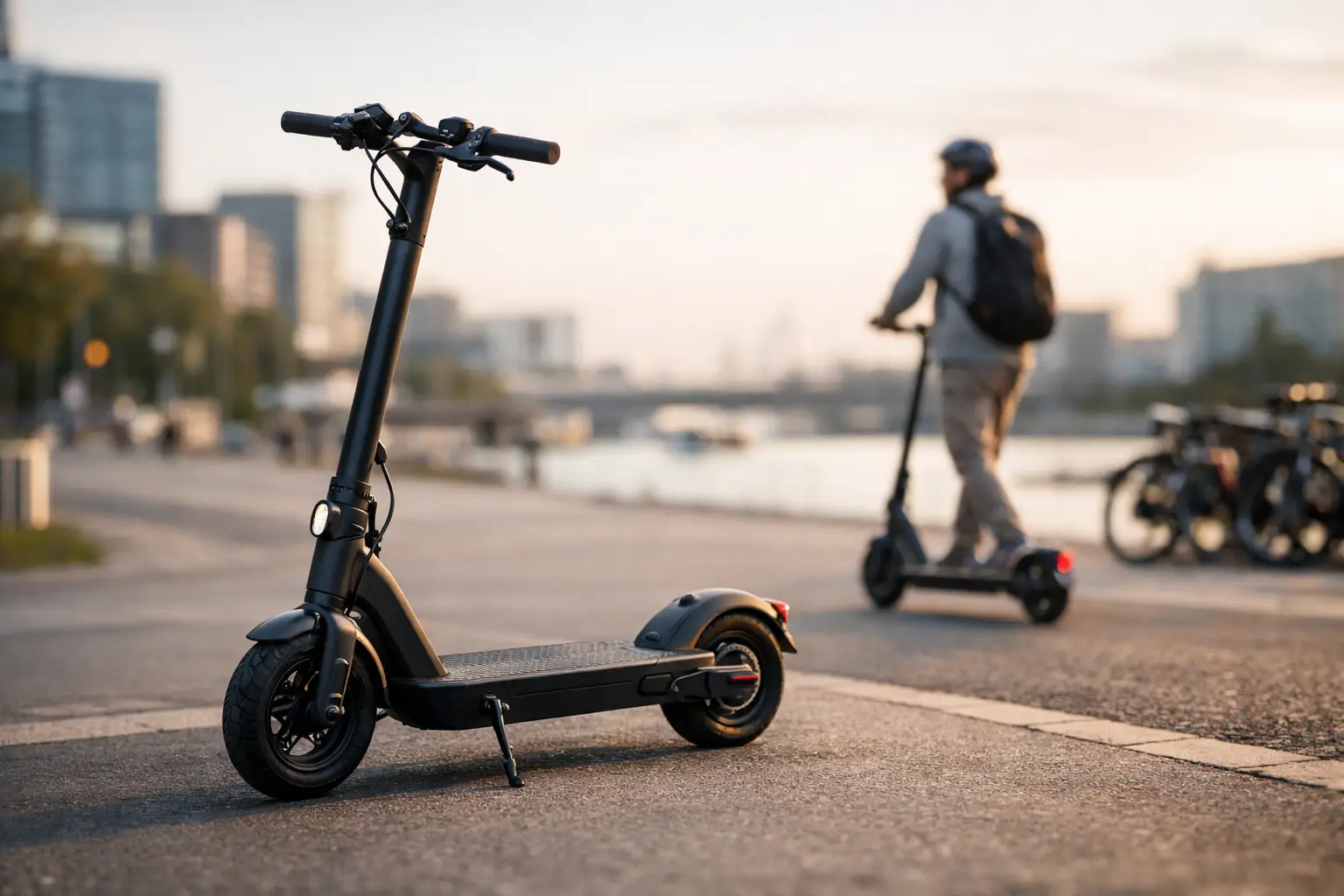
A decent electric scooter review should begin where the sales page stops: on a rough bit of pavement, halfway up a hill, with a backpack on and enough battery left to get home. Claimed top speeds and huge range figures look good in a product listing. They tell you far less about whether the scooter feels safe, comfortable and worth carrying into a flat after a normal day out.
That is the difference between a quick first look and a real-use review. At Vlog Life 247, the point is not to make every bit of kit look exciting. Real Vlogs. Real Places. Real Reviews. If a scooter is brilliant on smooth paths but awkward on broken roads, that matters. If it has power but weighs a ton, that matters too.
What an electric scooter review should actually test
The best test is not a five-minute spin around a car park. It is a mix of everyday rides: a short trip to the shops, a commute with stops and starts, a hill, poor surfaces, a ride after dark, and the moment you need to fold it and lift it. Those are the situations that expose the gaps between the specification sheet and real life.
Start with the ride position. A deck that looks roomy in photos can feel cramped when you are standing with a bag over one shoulder. Handlebars may be too low for taller riders, while narrow grips can make longer journeys tiring. Small details add up quickly when you are riding for 20 or 30 minutes rather than just filming a launch clip.
Then there is throttle response. Some scooters pull away smoothly and predictably. Others feel jumpy, especially in their higher riding mode. More power is useful for hills and faster roads where legal, but a controlled start is often more valuable for day-to-day confidence. New riders in particular should not mistake a sharp kick of acceleration for better quality.
Braking needs proper attention. Test the brakes from a sensible speed on dry ground, but also think about how they feel rather than only how quickly the scooter stops. Regenerative braking can help slow you down, though it rarely replaces a strong mechanical brake. A combination of front and rear braking generally gives more reassurance, provided the controls are easy to reach and do not require a panic-grip every time.
Range claims versus the range you will get
Range is where most electric scooter reviews need a reality check. The number on the box is normally achieved in favourable conditions: a lighter rider, flatter route, moderate speed, warmer weather and gentle acceleration. British weather and British roads do not always cooperate.
Your actual range depends on your weight, tyre pressure, hills, temperature, stop-start riding and how often you use the fastest mode. Cold weather can noticeably reduce battery performance. Riding flat out drains charge faster than cruising, and climbing the sort of hills found in many towns will ask more of the motor than a level cycle path ever could.
Instead of buying based on the biggest claimed figure, think about your real journey. If your return trip is six miles, do not shop for a scooter advertised at seven or eight miles. Give yourself room for detours, a windy day, battery ageing and the fact that you might not charge after every single ride. A model with comfortable range in reserve is less stressful than one that arrives home blinking on its last bar.
Charging time is part of the ownership experience too. A larger battery can mean a longer wait, so check whether the charging routine suits your life. If the scooter lives in a hallway or kitchen, consider where the charger and cable will sit without becoming a daily nuisance. Always use the supplied or approved charger, avoid charging unattended, and let a battery cool down after a hard ride before plugging it in.
Power is not the same as usefulness
Dual-motor scooters and higher-wattage models can be properly quick, especially compared with basic commuter machines. A scooter such as the Kukirin G2 Master appeals because it promises stronger acceleration, hill-climbing ability and a more substantial ride than an entry-level option. That can be great fun and genuinely useful on steeper routes.
But there is a trade-off. More motor power usually comes with extra weight, a bigger frame and a battery that takes longer to charge. It may be less practical if you need to carry it up stairs, put it in a small car boot, or store it in a compact flat. For a short, flat journey, a lighter scooter that is easy to live with can be the smarter choice.
Comfort starts with tyres and suspension
If you have only ridden on smooth tarmac, it is easy to underestimate comfort. The moment a route includes patched roads, dropped kerbs, paving slabs or loose ground, the wheels and suspension become a big deal.
Pneumatic tyres generally offer more grip and cushioning than solid tyres, although punctures are a risk and tyre pressure needs checking. Solid tyres remove that maintenance worry but often pass more vibration into your hands, feet and knees. There is no perfect answer. Someone who hates the thought of fixing a puncture may prefer solid tyres; someone riding longer distances will often appreciate the comfort of air-filled ones.
Suspension can take the edge off rougher routes, but it does not make a scooter invincible. A suspension setup that looks impressive on a listing can still feel harsh if the deck is narrow or the tyres are small. It also adds parts that may need looking after. Watch for rattles, movement around the stem and any noises that develop after a few rides. A quiet, planted scooter inspires more confidence than one that feels loose or clattery.
The boring details decide whether you keep using it
Portability is one of those features you only understand after owning a scooter for a week. Check the actual weight, not just the word “foldable”. Folding does not automatically mean easy to carry. A 25kg machine may fold neatly but still be a pain on a train platform or up two flights of stairs.
Look at the folding mechanism in person where possible. It should feel firm when locked, straightforward to release, and free from wobble at the stem. Also consider the folded shape. Can you comfortably hold it? Will it fit where you plan to store it? Is there a proper hook or latch to keep it shut while carrying it?
Lights deserve more than a passing mention. A bright front light helps you see the road, but visibility to other people is just as important. Rear lights, brake lights and reflectors make a difference when traffic is behind you on a dull afternoon. If you expect to ride near dusk, do not treat lighting as an optional extra.
Water resistance is another area where marketing can get vague. A rating may offer some protection from splashes, but it is not a promise that the scooter enjoys heavy rain or deep puddles. Electronics, wet leaves and reduced grip are a poor mix. If rain is likely, slow down, avoid standing water and follow the manufacturer guidance rather than assuming an advertised rating covers everything.
UK legality is part of the buying decision
Before getting carried away by specs, understand where you can ride. In Great Britain, privately owned electric scooters are not generally legal to use on public roads, cycle lanes or pavements. They can be used on private land with the landowner’s permission. Rental e-scooters may operate through authorised local schemes, with their own rules and requirements.
This is not a small footnote. It changes what value looks like. A powerful scooter might be ideal for permitted private land, a campsite or a large work site, but it is not automatically a legal replacement for a public-road commute. Check the current rules for your area before buying, as local schemes and guidance can change.
Whether you ride a scooter or not, basic protective gear is still common sense. A well-fitting helmet is a sensible starting point. Gloves can help with comfort and protection, and closed shoes give better control than sliders. You also need to be honest about your route. Fast traffic, poor road surfaces and busy pedestrian areas are not made safe by a bigger motor.
Our honest buying view
A good electric scooter is not necessarily the fastest, flashiest or most expensive one. It is the one that fits the rides you can actually and legally make, feels stable under your feet, has enough real range for your plans, and does not become a chore to charge, carry or store.
If you are comparing models, ignore the temptation to judge them from one headline number. Think about the hill you always avoid, the cracked pavement outside your local shop, the weight of your bag and the place it will live at night. A scooter earns its place when it handles those ordinary moments without drama – and that is the sort of real ride worth paying attention to.
Leave a Reply