
Reviews have a new home. I’m moving my product reviews from Vlog Life 247 to Vlog Life Reviews. Subscribe there for my latest reviews.
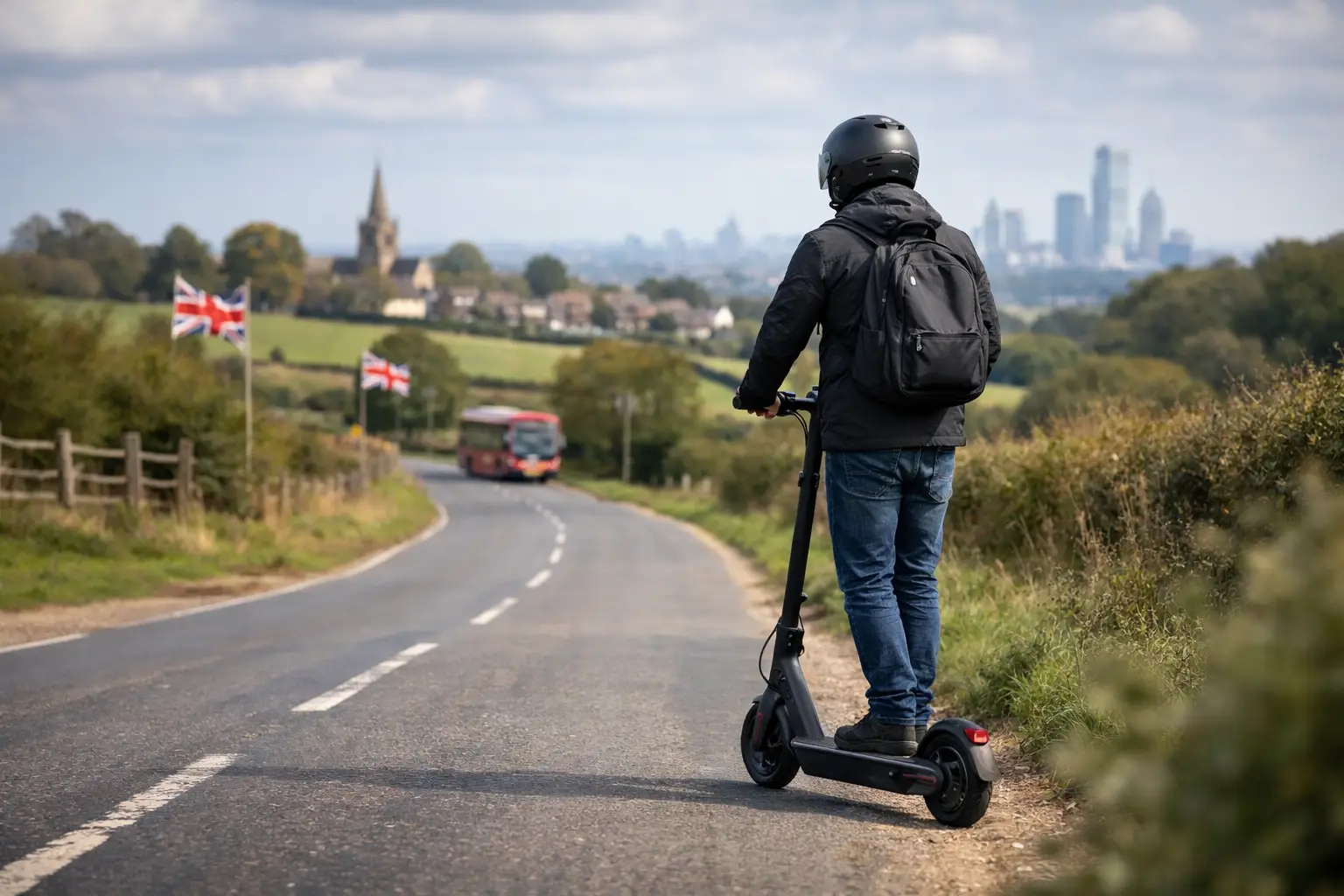
The battery percentage looked healthy when I left, the route did not look dramatic, and yet the range disappeared far quicker than the number on the box suggested it would. That is why a proper commuter scooter range test matters. A scooter is not ridden around a flat indoor track by a lightweight tester on a warm, windless day. It is ridden to the station, through stop-start traffic, up the hill that never looks steep from the car, and sometimes in proper British weather.
For an everyday rider, claimed range is not useless. It is just the best-case number, not a promise for your Monday morning commute. The useful question is simpler: can this scooter get you there and back with enough charge left that you are not staring at the battery bars halfway home?
What a commuter scooter range test should measure
A real test should copy the journey you actually intend to make. That means starting with a full charge, carrying your usual bag, wearing the clothes you would normally wear, and using a route with the same hills, crossings and rough patches you face during the week.
Range is not only about distance. It is about confidence. If your round trip is six miles and the scooter reliably gives you 14 miles in your normal conditions, that leaves useful breathing room for a diversion, a headwind or a forgotten charger. If it manages seven miles on a good day, it may still technically complete the trip, but it is not a relaxing commuter option.
The most honest result records more than the final mileage. Note the weather, rider weight including luggage, riding mode, average speed and how much climbing was involved. Those details explain why one person’s result can be completely different from another’s, even on the same model.
Why the advertised number rarely matches the road
Manufacturers usually quote maximum range under favourable conditions. There is nothing strange about that – car fuel figures and phone battery claims work in a similar way. The problem begins when shoppers treat the maximum figure as the everyday figure.
The biggest drain is usually speed. Riding flat out pulls more power than cruising at a steady, sensible pace. On a longer commute, the difference can be surprisingly large. A scooter that feels lively at full power may cover more ground overall when ridden one mode down.
Hills matter even more than many people expect. One long climb can knock the battery percentage down quickly, particularly if the rider is heavier or has shopping, a laptop and a decent lock in their bag. The downhill section may recover a little energy through regenerative braking on some scooters, but it will not cancel out the climb.
Then there is the surface. Smooth cycle paths are kind to range. Broken tarmac, paving slabs, gravelly sections and frequent kerbs are not. Wider tyres and suspension can make a commute much more comfortable, but those benefits can come with extra weight and rolling resistance. There is always a trade-off.
Cold weather is another real-world factor for GB riders. Lithium batteries tend to perform less happily in low temperatures, and winter range can fall noticeably. Add wet roads, thicker clothing, wind and more cautious acceleration, and the same route may produce a very different result from a sunny July ride.
The route is the test, not the stopwatch
It is tempting to test range by finding a long, empty stretch and riding until the battery is nearly flat. That can be useful for seeing a scooter’s absolute limit, but it does not tell the full commuting story.
A commuter route has interruptions. You pull away from lights, slow for pedestrians, wait at junctions and deal with traffic that will not move in a neat, predictable line. Each hard launch uses more energy than a gradual start. Repeated braking and accelerating also makes the ride less smooth, even when the distance is short.
For a fair test, ride normally. Do not crawl along purely to chase a big mileage number, and do not pin the throttle everywhere just to prove a point. If you would normally ride in the middle power mode and brake steadily, do that. The aim is not to create a dramatic result. It is to find out what happens on an ordinary day.
A phone mounted safely or carried in a pocket can track distance, while the scooter display gives you a rough view of battery use. The display is rarely perfect, especially near the end of a charge, so pay attention to how the scooter feels as well. If acceleration becomes noticeably weaker on a hill with two bars still showing, that is worth knowing before you rely on it for a daily journey.
A simple way to test your own commute
Start by charging the scooter fully and letting it finish its charge cycle as recommended by the manufacturer. Check tyre pressures before heading out. Underinflated tyres can make the scooter feel sluggish and eat into range, so this small bit of maintenance makes the result more useful.
Ride your usual route there and back, ideally at the time you would commute. Morning traffic, a packed shared path and a windy exposed road can all change the experience. Record the distance at the end, the battery level remaining and anything that clearly affected the ride.
Repeat the same trip at least twice if you can. One ride can be skewed by a fierce headwind or a long delay at roadworks. Two or three runs give you a better picture. If the result varies wildly, look at tyre pressure, temperature, riding mode and how aggressively you were accelerating before assuming there is a battery fault.
Once you have a typical result, build in a safety margin. A sensible rule is to plan around roughly 60 to 70 per cent of the range you achieved, not every last mile. Batteries age, cold days arrive, and nobody wants to arrive at work with a scooter that needs carrying up the final hill.
The range figures that actually matter
Instead of asking whether a scooter has a 25-mile or 40-mile claimed range, match it to your routine. A short two-mile run to a station has different needs from a 10-mile ride across town. For short trips, portability, charging time and how easily the scooter folds may matter more than a giant battery.
For longer commutes, battery capacity becomes more important, but so does weight. A large battery can add reassurance on the road and frustration at the station stairs. If you need to lift the scooter regularly, a heavier model may stop being practical even if its range is impressive.
It also pays to think about charging habits. Can you charge securely at home? Is there somewhere appropriate to charge at your destination? Is the charger compact enough to carry? A scooter that can make the outward journey but needs several hours to recharge may not suit a same-day return unless you have access to power.
Do not overlook the cost of a flat battery either. Electric scooters can be awkward to push, particularly larger performance models. Riding the last mile with reduced power is not much fun, and carrying one is worse. Real Reviews should mention that stuff, because it is the bit you remember after the spec sheet is forgotten.
A quick legal reality check for UK riders
Before planning a commute, check the rules where you live and where you will ride. In Great Britain, privately owned e-scooters are generally restricted to private land where you have permission. Approved rental scooters can operate in participating local trial areas under their specific rules. Roads, pavements and cycle infrastructure are not automatically fair game for a privately owned scooter.
That may feel like an inconvenient detail when the product itself looks ideal for commuting, but it is a major part of whether the purchase makes sense. A great range result does not help if the route is not legal for the scooter you own. Rules and local schemes can change, so verify the current position before spending money or setting off.
Range is only useful when it is repeatable
The best scooter result is not the biggest number you can post after one perfect ride. It is the distance you can expect on an average week, with your bag, your route and the weather doing what British weather does.
If a scooter comfortably covers your real journey with charge to spare, rides predictably and fits your legal riding options, that is far more valuable than an optimistic headline figure. Real Vlogs. Real Places. Real Reviews. Put the scooter through the commute you actually have, and let that result make the decision for you.
Leave a Reply