
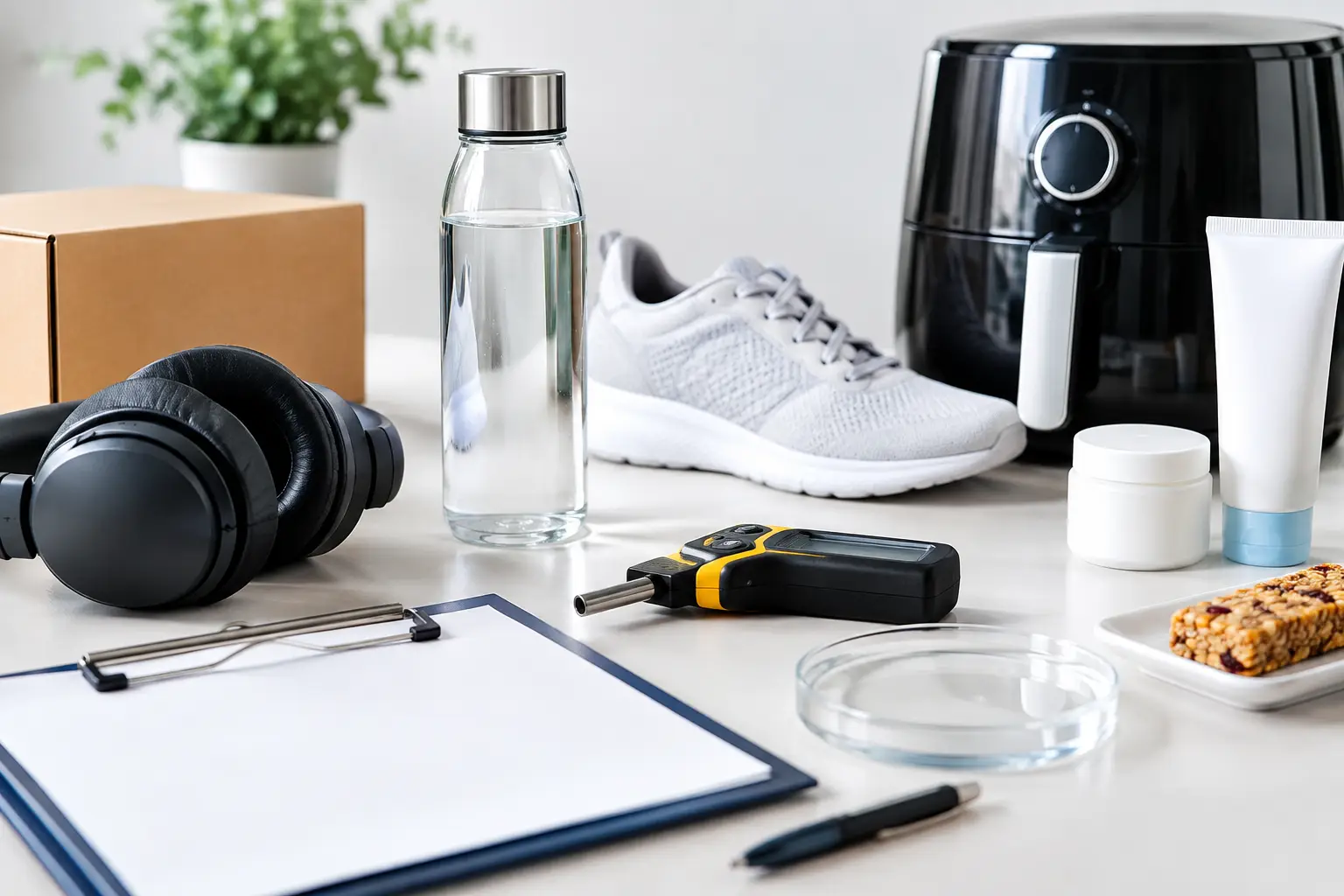
A phone holder that shakes loose on a rough road, a travel mug that drips in a bag, or a tyre inflator with a lead too short to reach the rear wheel – these are the consumer product testing examples that matter once the box is open. A product can look smart in its listing and still be awkward, flimsy or simply unsuitable for the job it was bought to do.
For ordinary buyers, good testing is not about a laboratory full of gauges. It is about asking sensible questions, using a product as it will actually be used, and being honest about what worked, what did not, and who might still find it useful. That is especially relevant for people buying kit for a weekend drive, a motorcycle meet, a day out, a holiday, or everyday life at home.
What useful product testing looks like
A useful review starts with the intended job. A boot organiser should keep loose items under control, fit the available space and be easy to remove when the shopping needs to go in. A compact camera tripod should be stable enough for filming, quick to set up and small enough that someone will genuinely carry it.
The key is context. A cheap item may be perfectly decent for occasional use but poor value if it fails after a few weeks. A more expensive version may feel better made, yet offer little practical benefit to someone who uses it twice a year. Product testing should make that trade-off clear rather than declaring one option the winner for everybody.
It also helps to separate hands-on findings from desk research. Hands-on testing can show whether a zip catches, a switch is easy to use with gloves on, or a product takes up more room than expected. Research can compare stated dimensions, compatibility, warranty terms and features across several products. Both have value, but they are not the same thing.
Consumer product testing examples in real life
The most revealing tests are often simple ones that mirror an ordinary day. Here are the areas worth looking at when assessing a product properly.
Fit, size and compatibility
Fit is easy to overlook until a product arrives. A car phone mount might technically suit a windscreen, but block too much of the driver’s view. A luggage rack bag may have the right capacity but not attach cleanly to a particular motorcycle. A car cleaning brush can be well made but too bulky for tight wheel designs.
Good testing checks measurements and connection points before making assumptions. Does the charging cable reach? Will a case still fit around the phone? Can the item be stored where it needs to live? If compatibility depends on a particular vehicle, handlebar size or connector type, that should be stated plainly.
Ease of use when time is short
People rarely use products under perfect conditions. They use them in a damp car park, at the side of the road, while packing for a day out, or when they are already running late. That is when fiddly clips, unclear instructions and tiny buttons become more than a minor annoyance.
Take a portable tyre inflator. Useful testing would cover how clearly the controls are labelled, whether the hose screws on without trouble, how the display reads in poor light, and whether it is straightforward to pack away. The exact inflation time can vary with tyre size, starting pressure and battery charge, so it is better to explain the conditions than present one figure as universal.
Build quality after repeated use
A first impression can be misleading. Plastics may feel solid until a hinge is opened repeatedly. A bag may look tidy until its straps carry a real load. A dashboard cleaning product may leave an attractive finish at first but become streaky when used in bright sunlight.
Repeated-use testing does not need to be dramatic. It means watching for loose stitching, worn coatings, fading markings, weak hinges and parts that stop lining up. For electrical items, it can also mean checking whether the cable, plug and socket still feel secure after normal use. If long-term durability cannot be assessed, say so. A product used for a few days cannot honestly be judged as though it has survived a year.
Comfort and convenience
Comfort is not limited to clothing. It applies to a helmet intercom that presses against the ear, a car seat cushion that changes driving position, or a handheld vacuum that becomes tiring after a few minutes. Convenience matters too: can it be cleaned, charged, folded, carried and put away without creating another chore?
This is where personal preferences matter most. One person may prefer a firm cushion; another may find it uncomfortable. Rather than treating that as a fault, a fair test describes the design and explains who it may suit. The same goes for weight. A heavier product can feel reassuringly sturdy, but it may be the wrong choice for someone carrying it around all day.
Performance in the conditions it is made for
Products should be tested against their own promise. A rain cover should be checked in wet conditions, not merely held under a tap for a few seconds. A windscreen mount should be assessed on a journey where vibration is possible. A reusable food container should be checked for leaks in the position it would travel in, not left upright on a kitchen worktop.
Safety needs extra care. Do not push an item beyond its stated limits just to create a dramatic result. Check that instructions are followed, note any relevant warnings, and avoid presenting informal use as a formal safety test. With vehicle accessories, visibility, secure fitting and distraction are more useful things to discuss than trying to force a failure.
A simple way to compare similar products
When comparing two or three products, use the same test for each one. If one phone mount is tested on a smooth local run and another on a bumpy route, the comparison is not especially helpful. Keep the phone size, mounting location and journey type as consistent as possible.
Then focus on the differences a buyer will notice: setup time, stability, access to controls, storage space, cleaning, noise, cable length and whether the price increase changes the experience. A table of specifications has its place, but it rarely tells the full story. Two products can share the same stated capacity while one is far easier to pack and use.
Price should be handled with care, too. Prices change often, and a sale price can make a product look better value than it usually is. It is more useful to explain what the extra money appears to buy – perhaps better materials, a longer lead, simpler controls or included accessories – and let readers decide whether that matters to them.
What honest reviews should say when testing is limited
Not every product can be tested for months, in every vehicle, or in every kind of weather. There is nothing wrong with a limited test if its limits are clear. A review can say that an item was assessed over a short period, that it was not fitted to every model, or that long-term reliability remains unknown.
Likewise, a product that is not ideal for one use may still be good for another. A small power bank may be too limited for a full weekend away but handy for keeping a phone alive during a long day at a car show. A compact cool bag may not suit a family picnic but work well for drinks and snacks on a short drive.
That clarity is what turns a review into useful buying advice. Real Vlogs. Real Places. Real Reviews. The point is not to make every item sound brilliant, but to help somebody avoid spending money on the wrong thing.
Before you buy, look for the details
The best consumer product testing examples leave readers with information they can apply to their own situation. Look for the conditions of the test, what was actually used, any limits encountered, and whether the reviewer explains who the product is for. Be wary of big claims with no mention of setup, durability or compromises.
For future straightforward product and car reviews, readers can subscribe to Vlog Life Reviews. Until then, the most useful question to take into any purchase is simple: will this make the real job easier, or will it become another thing left unused in the boot, cupboard or garage?
Leave a Reply