
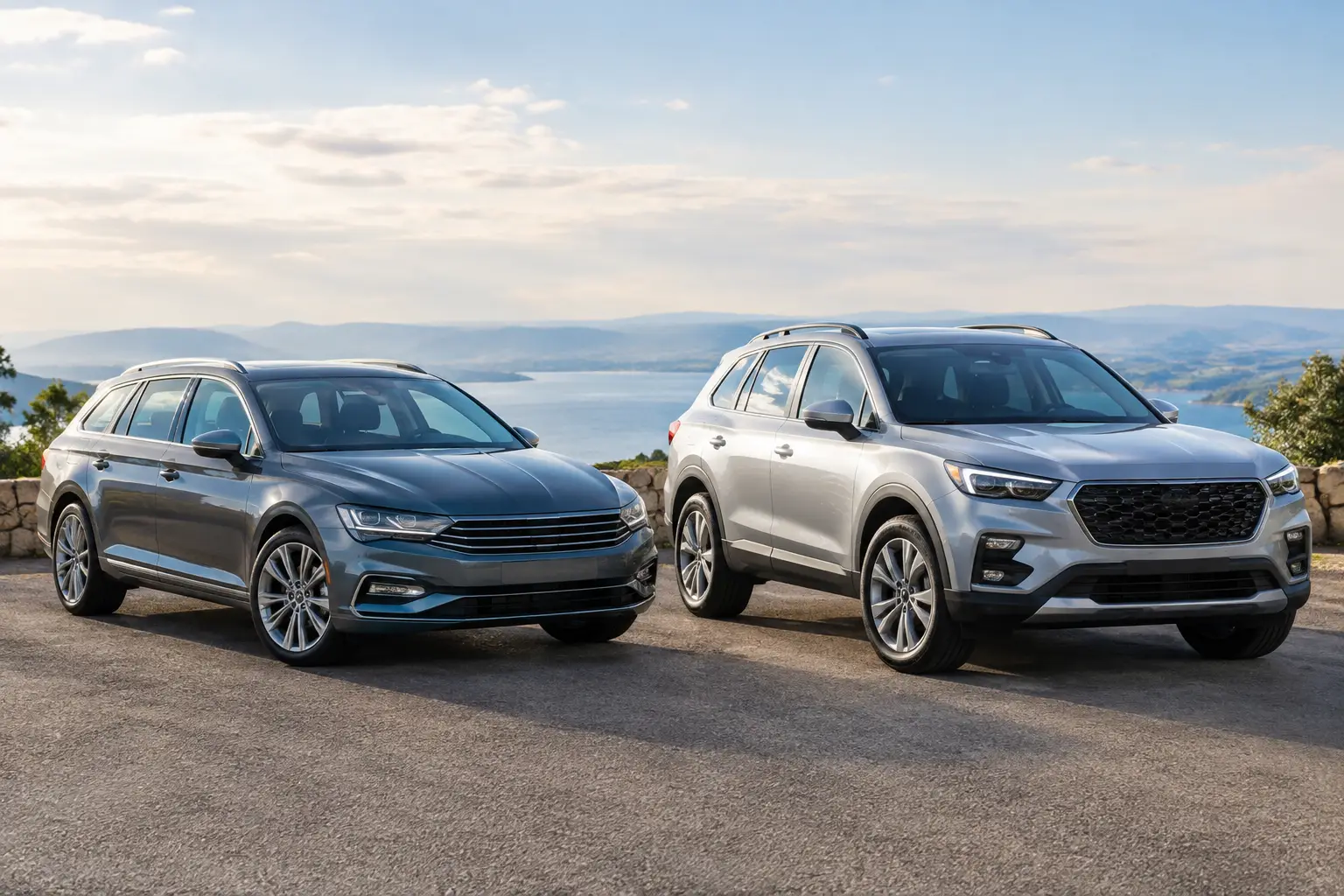
A folded buggy, a muddy dog, a weekly supermarket shop and a run to the tip can settle the estate versus SUV practicality debate far quicker than a glossy brochure. Both body styles can make excellent family cars, but they use their space very differently. The right choice comes down to what goes in the boot, who sits in the back, and what your normal week actually looks like.
This is a researched comparison rather than a hands-on test of one particular model. Sizes, equipment and towing limits vary hugely between cars, so the useful bit is understanding the patterns before narrowing down your shortlist.
Estate versus SUV practicality in everyday use
An estate is usually the straightforward answer for drivers who carry long, awkward or heavy items. Its boot floor is low, the opening tends to be wide, and the roofline runs further back than it does on a hatchback. That gives a long, square load area that is genuinely useful for flat-pack furniture, pushchairs, camping gear and a dog crate.
The lower loading lip matters more than it sounds. Lifting a heavy suitcase or a large bag of compost over a tall SUV bumper soon gets tiresome, especially if it is a regular job. An estate also sits closer to the ground, so a dog can often step in with less of a leap. For anyone whose car doubles as weekend transport for bikes, walking boots and wet coats, that simple access is hard to ignore.
SUVs fight back with height. The raised seating position can make it easier to get children into car seats without bending quite so far, and many people simply prefer the view ahead in traffic. A taller cabin can also help with bulky items that need to stand upright, such as tall plants or a folded wheelchair. Rear passengers may feel less hemmed in too, particularly in a larger SUV.
But a big-looking SUV does not automatically have a bigger usable boot. Some compact SUVs have a shorter load floor than an estate based on the same mechanical parts. A sloping rear screen can also steal space from the top of the luggage area. Compare the shape, not just the official litre figure. Take the things you actually carry to the viewing if the seller allows it.
The boot test that brochures cannot do
Official boot measurements are useful for a rough comparison, but they do not reveal whether a buggy fits without removing a wheel, or if the parcel shelf has to come out whenever the dog travels. Look at the height under the tailgate, the depth behind the rear seats and whether the wheel arches pinch the space.
Also check what happens when the rear seats are folded. Estates often create a long, relatively flat floor, though not always. SUVs can offer a useful tall opening, but some have a pronounced step in the floor or a seat base that will not fold fully flat. If you regularly collect larger purchases, these details matter more than a headline capacity number.
Passengers, comfort and getting about
For a family of four, either type can work very well. The important question is whether the rear bench gives enough room once the front seats are set for the tallest regular driver. A car can have a generous boot and still feel tight behind a six-foot driver.
SUVs often win on the ease of getting in and out. Older relatives may appreciate not having to drop down into a low seat, while parents can find the raised hip point helpful when fastening a child into a seat. That is not a universal rule, though. Some SUVs have a high sill to step over, and some estates have well-shaped doors and comfortable seat heights.
For longer motorway runs, estates are often the quieter, more settled choice. Their lower roof and lower centre of gravity can mean less body movement in crosswinds and a more car-like feel through bends. A good SUV can still be very comfortable, particularly one with sensible wheel sizes and properly supportive seats, but large wheels and firm suspension can spoil the raised-car appeal on broken local roads.
If you live down a rough lane, deal with frequent flooded car parks or occasionally visit a field for an event, extra ground clearance has real value. It reduces the worry of grounding the underside and makes poor surfaces less stressful. It does not turn every SUV into an off-roader, however. Tyres, drivetrain and conditions all matter, and most owners will sensibly stay on ordinary roads.
Parking, fuel and the cost of ownership
An estate can look long, but it is usually lower and narrower-feeling from the driver’s seat than an equivalent SUV. That can make multi-storey car parks, tight supermarket bays and low barriers less of a nuisance. Rear visibility varies, so parking sensors and a camera are worth checking rather than assuming they are fitted.
SUVs can be easier to place in slow traffic because of that raised view, yet their height is a genuine consideration. Check the roof height against the car parks you use, especially if roof bars or a roof box are part of the plan. A taller vehicle can also be more awkward to wash and load.
Weight and aerodynamics normally favour the estate. With a lower, sleeker shape, it will often use less fuel or electricity than a similarly powered SUV, particularly at motorway speed. That can mean more range from an electric car and lower running costs over a year. The gap is not identical in every comparison, but it is a fair expectation to investigate.
Tyres can be another overlooked cost. SUVs are commonly fitted with larger wheels and wider tyres, which may look smart but can cost more to replace and can make the ride less forgiving. Insurance groups, vehicle tax, servicing and finance costs are model-specific, so get real quotes before deciding. Practicality includes what the car costs to keep on the road, not only how much it can swallow with the seats down.
Towing and carrying on the roof
If towing is part of the brief, do not choose by body style alone. Some SUVs have strong towing credentials and may feel reassuringly stable with a caravan or trailer attached. Equally, plenty of estates are capable tow cars. Check the exact model’s permitted towing weight, nose weight and licence requirements, rather than relying on a badge or a general claim.
The same applies to roof loads. An SUV’s height can make fitting bikes, kayaks or a roof box a two-person task. An estate is easier to reach, which becomes useful when packing for a holiday at six in the morning. On the other hand, if you need to carry muddy boots, a wet dog and passengers at once, the extra cabin height in an SUV can be welcome.
Which one suits your life?
Choose an estate if your priority is maximum useful load space, a low boot floor, lower running costs and relaxed long-distance road manners. It is particularly hard to beat for dogs, prams, luggage and regular DIY runs. It may not have the visual presence of an SUV, but it is often the less complicated practical choice.
Choose an SUV if the raised driving position, easier entry and extra ground clearance will make everyday journeys more comfortable. It makes most sense when your routes include rough surfaces, when getting children or adults in and out is a regular concern, or when you prefer a taller cabin over the longest possible luggage bay.
There is no need to treat either choice as automatically more sensible. A well-designed estate can be a better family tool than a fashionable compact SUV, while a properly sized SUV can suit a household that would find a low car awkward every day. The best approach is to write down the jobs your next car must do, then inspect the boot, rear seats and driving position with those jobs in mind.
For straightforward future car reviews and buying comparisons, subscribe to Vlog Life Reviews on YouTube. Real Vlogs. Real Places. Real Reviews.
Before signing anything, take along the buggy, dog crate, golf clubs or whatever else lives in your current boot. The car that handles those ordinary things without a second thought is usually the one that will still feel right long after the showroom shine has gone.
Leave a Reply