
Reviews have a new home. I’m moving my product reviews from Vlog Life 247 to Vlog Life Reviews. Subscribe there for my latest reviews.
A vlog can survive a shaky walking shot, a grey British sky and the odd bit of wind in the frame. What viewers will not stick around for is sound they have to fight to hear. The best microphone for daily vlogging is not always the most expensive one. It is the one you will actually take out, set up quickly and trust when something worth filming happens.
For food runs, local events, day trips, product tests and everyday chat-to-camera videos, convenience matters as much as audio quality. A brilliant microphone left at home in a drawer is no help when you have just found a spot people need to know about.
The best microphone for daily vlogging depends on how you film
Before picking a model, be honest about your usual setup. If you film mostly on a phone while walking around town, a small wireless microphone makes far more sense than a large camera-mounted option. If you use a mirrorless camera for restaurant reviews or travel footage, an on-camera mic may be the easiest way to improve sound without extra batteries, receivers and charging cases.
Your filming environment matters too. Indoor talk-to-camera clips are forgiving. Busy streets, cafés with music playing, food markets and windy seafronts are not. A microphone cannot remove every bit of background noise, but getting it closer to your mouth makes a massive difference.
For most people making regular lifestyle videos, a wireless system is the practical answer. It gives you cleaner speech, lets you move naturally and avoids the hollow sound that comes from relying on a phone or camera mic several feet away.
Our best microphone for daily vlogging picks
Best overall: DJI Mic Mini
The DJI Mic Mini is the best all-round choice for daily vlogging if you want good speech audio without turning every shoot into a technical job. The transmitters are small and light, so they do not look ridiculous clipped to a T-shirt or jacket. That matters when you are filming real life rather than setting up a studio scene.
It is especially useful for walking-and-talking footage, product reviews and quick interviews with someone across a table. The system is compact enough to live in your everyday bag, and the charging case makes it easier to keep ready. That is a bigger benefit than it sounds when you vlog often.
There are trade-offs. Wireless systems cost more than a simple wired or on-camera microphone, and you need to remember to charge them. You also need to check that the receiver matches your phone or camera connection before buying. But for creators filming a mix of phone and camera content, the flexibility is hard to beat.
Best for phone vloggers: RØDE Wireless Micro
If your phone is your main camera, the RØDE Wireless Micro is worth a close look. It is designed to keep the setup simple: plug the receiver into a compatible phone, clip on a transmitter and start recording. For quick food reviews, days out or a piece-to-camera update while travelling, that simplicity is the whole point.
It suits people who do not want a screen full of settings before filming. The small charging case also makes it feel more like an everyday carry item than a piece of production kit.
The limitation is straightforward. It is primarily a phone-focused choice, so it may not be the right buy if you regularly swap to a camera. Check whether you need the USB-C or Lightning version, and consider whether you are likely to change phones soon. Buying a microphone that only works with one setup can become annoying very quickly.
Best budget on-camera option: RØDE VideoMicro II
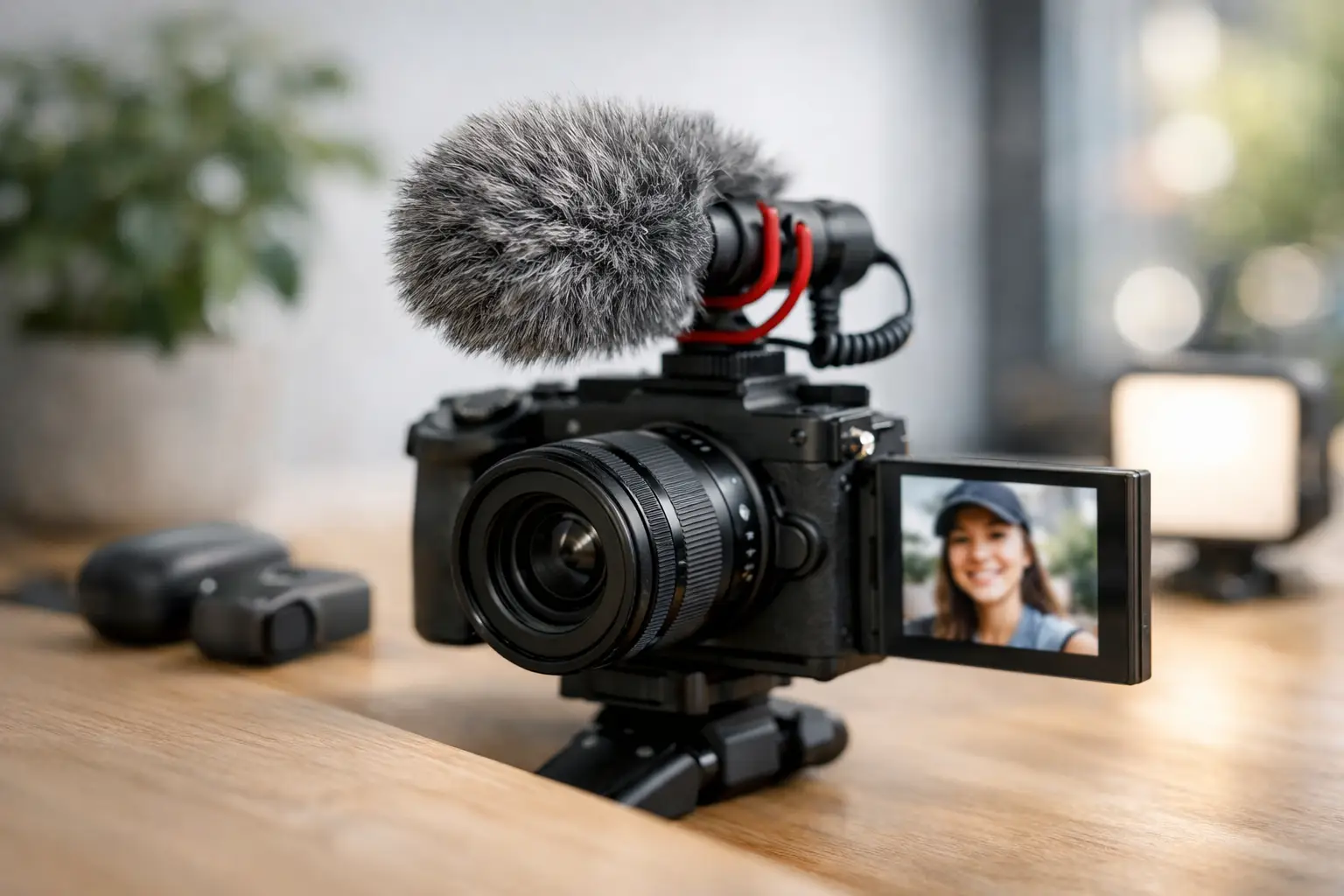
For camera vloggers who want better audio without the extra kit, the RØDE VideoMicro II is a sensible choice. It is a compact directional microphone that sits on top of a camera and focuses more on what is in front of it than the general noise around it. It does not need its own battery, which is one less thing to worry about before leaving the house.
This is a good fit for filming landmarks, food close-ups with commentary behind the camera, or a straightforward walk-around vlog where you stay near the lens. It is also a useful option for anyone starting out who wants a noticeable step up from their camera’s built-in mic without spending wireless-system money.
Just keep expectations realistic. An on-camera microphone is still attached to the camera, not your body. If you are holding the camera at arm’s length, it will sound better than the built-in mic, but it will not give you the close, clear voice of a wireless transmitter. In a loud café or on a busy pavement, distance still wins.
Best for serious reviews: DJI Mic 2
The DJI Mic 2 makes sense when your daily vlogs are growing into more detailed product reviews, longer interviews or videos where you cannot afford to lose a good take. It has a more advanced feature set than the Mic Mini, including internal recording on the transmitters. That can save a clip if there is a connection problem or the camera audio goes wrong.
For a real-use review, that safety net is valuable. You may only get one chance to capture a product doing something interesting, whether that is a scooter test, a market stall demonstration or a reaction from somebody using it for the first time.
The catch is price and size. It is more than many casual vloggers need, and its extra controls will be wasted if you only make short phone clips. Buy it because you need the backup recording and wider feature set, not because the more expensive option automatically makes more engaging videos.
What to look for before spending your money
The first thing to check is compatibility. Phones, cameras and tablets use different ports, and some microphones need a specific receiver or adapter. Do not assume a USB-C connector means every USB-C phone will work in exactly the same way. Check the microphone’s supported devices and whether it can record while your phone is charging if that matters to you.
Next, think about wind protection. If you vlog outdoors in the UK, you need a proper furry windscreen, often called a deadcat. It may not look glamorous, but it can stop a useful clip being ruined by gusts. The little foam cover included with many mics helps indoors but is rarely enough for a windy day.
Battery life is another real-life issue. A system with a charging case is easier to live with than one that needs separate cables every time. Still, make a habit of checking battery levels before leaving. A small power bank in your bag is often more useful than chasing the microphone with the biggest advertised number.
Finally, do a five-minute test at home. Record yourself speaking at normal volume, walking a few steps away and talking near a window or extractor fan. Listen back through headphones. You are checking for hiss, rubbing from clothes, distortion and whether your voice sounds natural. Settings and placement often improve audio more than changing to a pricier microphone.
The simple setup that works most days
Clip a wireless transmitter around hand-width below your mouth, ideally on a stable part of your clothing. Keep it away from loose scarves, necklaces and jacket zips, as these can scrape against the mic. If you are using an on-camera microphone, keep the camera as close as you comfortably can and speak towards the lens rather than turning away mid-sentence.
When filming in a noisy place, do not try to talk over everything. Move a few steps away from the speaker, coffee machine, road or crowd if you can. Capture a few seconds of the atmosphere separately, then record your main thoughts somewhere quieter. That approach still feels real, but viewers can actually hear why the place or product is worth their time.
The best choice for most regular creators is the DJI Mic Mini because it balances size, sound and everyday convenience. But a smaller budget, a phone-only setup or a camera-led filming style can make one of the other options the better call. Real Vlogs. Real Places. Real Reviews. Start with the microphone that fits your actual routine, then get out and make the videos people came to see.
Leave a Reply