
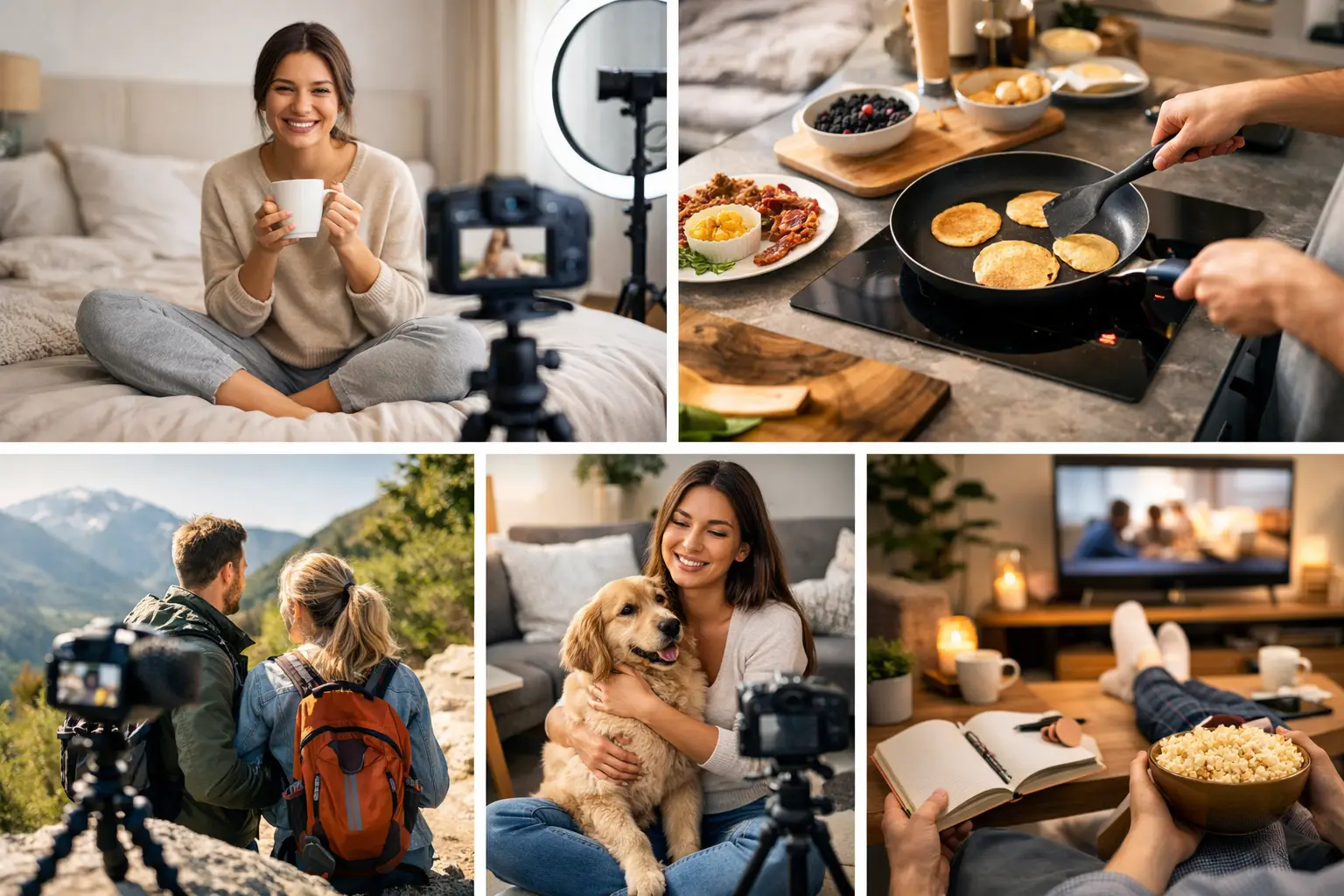
A decent vlog does not need a sunrise alarm, a spotless kitchen or a weekend spent pretending your life is more exciting than it is. The best everyday life vlog ideas usually come from things you were already going to do: popping to the shops, trying a local café, sorting a job you have put off, or testing whether something you bought is actually worth the money.
That is the point. People do not only watch lifestyle vlogs for perfect shots. They watch because they want a real sense of a place, a product or a normal day. If you can show what happened, what it cost, what annoyed you and what was genuinely good, you have already got something useful.
Start with what is already on your day
The easiest way to run out of ideas is to think every vlog needs a big theme. It does not. A simple day becomes watchable when there is a small question running through it: Is this new food spot worth the queue? Can you get a decent weekly shop on a set budget? Did that purchase make life easier after a month of using it?
Film the beginning, middle and end of one ordinary activity. Give people enough context to understand why you are doing it, then let the real moments carry the video. A rushed train, a closed shop, rain arriving at the wrong time or an unexpectedly brilliant meal are not mistakes to hide. They are the bits viewers remember.
You do not need to show every second either. A vlog about your Saturday can be ten focused minutes rather than three hours of footage. Keep the parts that move the story along and cut the repetition.
Everyday life vlog ideas for your regular routine
1. The realistic morning, not the perfect one
Show the version of your morning that actually happens. Maybe it is getting ready for work, making a quick breakfast, walking the dog or getting the kids out the door. If you oversleep or your tea goes cold twice, leave it in. That honesty gives the vlog a personality.
2. A weekly food shop with the real total
Food shopping is familiar to nearly everyone, especially when prices are on people’s minds. Choose a clear angle: feeding one person for the week, buying ingredients for easy dinners, comparing your usual shop with a cheaper supermarket, or seeing what you can get for a fixed amount. Show the receipt at the end, including the little extras that always find their way into the trolley.
3. Cook what you already have
Instead of a glossy recipe video, make dinner from the fridge, freezer and cupboard. Explain what you are trying to use up and be honest if a combination does not work. This style is useful because it feels achievable, not like viewers need a specialist shopping list.
4. The jobs nobody puts on Instagram
Cleaning the car, sorting a cluttered drawer, doing laundry, changing bedding, tackling the shed or finally dealing with a pile of post can all make a solid vlog. The hook is simple: you have a task, there is a visible before and after, and most people know the feeling of putting it off.
5. A no-spend day out
Take a walk around your area, visit a park, browse the library, check out a free museum or follow a local trail. This works particularly well if you show the practical side – where you parked, whether it was busy, how long it took and whether you would do it again. A useful local vlog is often more valuable than a generic travel montage.
6. An errand day as it really unfolds
There is a strange comfort in watching someone get things done. Film a day of collecting parcels, going to the chemist, returning something, filling up the car and picking up bits for home. Add a loose goal, such as getting everything finished before lunch. The ordinary stops become a story when viewers can follow the mission.
7. A rainy-day reset
British weather gives you plenty to work with. A wet afternoon can become a cosy but grounded vlog: a trip for groceries, cooking something warm, watching a film, sorting the flat or staying in because your original plans got washed out. Do not force cosy if the day was frustrating. Say that too.
Let your local area do some of the work
You do not have to travel far to make a vlog feel fresh. Most towns and cities have places people pass every day but have never tried. A small bakery, market stall, family-run restaurant, community event or scenic walk can be a proper outing when you cover it from first-hand experience.
8. Try the local place everyone talks about
Pick a café, takeaway or restaurant that keeps appearing in conversation and go in without over-selling it. Show the menu, the atmosphere, what you ordered and the final bill. Then give your actual view. Was the food good? Was the portion worth the price? Would you travel back for it, or was it fine once?
9. A neighbourhood walk with a purpose
Avoid filming a random walk with no direction. Give it a reason: finding the best independent coffee spot, checking out a newly opened high street business, taking a canal route, or visiting an area you have not been to in years. Talk about what has changed and what stands out.
10. Community days and local events
Street markets, food festivals, car meets, charity events, cultural celebrations and seasonal fairs are full of natural footage. The trade-off is that crowds and music can make filming harder, so capture a few clear pieces to camera before or after. On the day, focus on details: the food, the stalls, the atmosphere and anything that surprised you.
11. A day trip that includes the boring bits
A real day trip is not just the destination. It is the parking charge, the traffic, the café toilet situation, the weather turning and the question of whether the place is worth the effort. Those details help someone decide if they want to go themselves. They also make your video feel more trustworthy.
Turn purchases into real-use stories
Product content works best when it is part of your life rather than a speech to camera with a box on the table. Viewers researching a purchase want to know what happens after the excitement of opening it wears off.
12. One week with a new purchase
Whether it is a kitchen gadget, headphones, a backpack, an e-scooter accessory or a budget phone, use it in normal situations for a week. What was easy? What got irritating? Did it solve the problem you bought it for? There is no need to act like every item is life-changing.
13. What I would buy again
This is a strong format because it asks for a clear opinion. Pick a handful of things you have used enough to judge properly. Explain who each item suits, where it falls short and whether you paid full price. A £15 item that gets used every day can be more interesting than an expensive gadget with a long feature list.
14. The honest update nobody sees
Revisit something you reviewed or mentioned months ago. Is it still working? Has your opinion changed? Would you spend the money again? Long-term updates build trust because they show you are not only interested in the first impression.
Give simple days a clear hook
Not every vlog needs a challenge, but a small constraint can stop ordinary footage feeling aimless. Try filming a day where you only eat from local independents, spend under a set amount, use public transport instead of driving, or take viewers along while you complete one overdue task.
Other reliable hooks include comparing two versions of the same thing, trying a place based on a subscriber recommendation, or taking a familiar route at a different time of day. The point is not to manufacture drama. It is to give the viewer a reason to stay until the end.
If your day is genuinely quiet, say so. A calmer vlog can still work when it feels intentional. Talk through what is on your mind, show the small details and let the pace stay relaxed. Some viewers are looking for that exact break from loud, over-edited content.
What makes an everyday vlog worth watching
The best everyday videos are specific. “Come with me today” is broad. “Can I find a good lunch in town for under £10?” gives people something to follow. You can still show the rest of your day around it, but the video has a centre.
It also helps to share practical details without turning the vlog into a lecture. Mention prices where they matter, say how long something took, and explain the downside if there was one. If a place was brilliant but the queue was 40 minutes, both things can be true.
Most importantly, do not wait for a more interesting life before you start filming. Your ordinary routines, local finds and honest opinions are the material. Pick one thing you are already doing this week, give it a simple question, and take people along for the real version of it.
Leave a Reply