
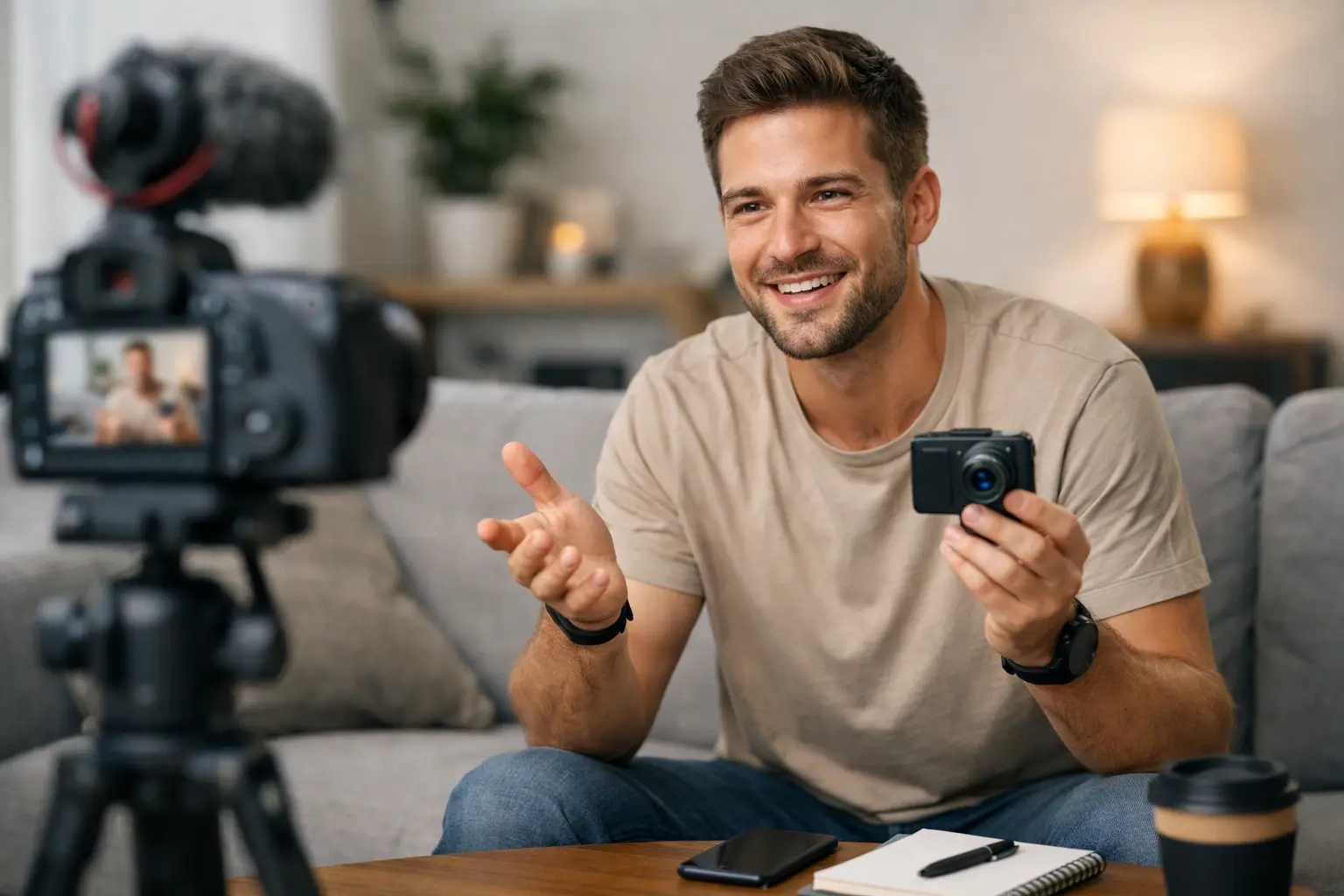
A great vlog is rarely the one with the cleanest edits or the most expensive camera. It is the one that makes someone feel as if they were there with you: waiting for food at a local spot, getting caught in the rain on a day out, or finding out whether a product actually works after a week of use. That is the heart of how to film authentic vlogs. You are not trying to look perfect. You are trying to show people what happened.
Viewers can usually spot when a reaction has been rehearsed, a location has been filmed only for the nice angle, or a review has been shaped around what a brand wants to hear. Real Vlogs. Real Places. Real Reviews. That standard sounds simple, but it changes how you plan, film and edit every video.
Start with a real reason to film
Before you pick up the camera, ask one basic question: why would you be doing this if nobody was watching? Maybe you are trying a café that has been recommended locally. Maybe you are heading to a cultural event, taking a weekend trip, or testing an e-scooter on the routes you would genuinely use.
That real reason gives your vlog a backbone. It stops the video becoming a collection of random clips and gives viewers a useful way into the experience. You do not need a scripted storyline. You just need a clear starting point: where you are going, what you hope to find out, and what is at stake for an everyday person watching.
For a food vlog, that might be whether the place is worth the queue and the price. For a travel day, it could be whether an attraction is enjoyable outside the polished photos. For a product review, it may be whether the item holds up during normal use, not five carefully controlled minutes in the garden.
Film the bits that are not perfect
The strongest footage is often the footage many creators leave out. The wrong turn, the closed door, the cold chips, the packed train, the noisy table, or the feature on a product that becomes irritating by day three. These moments add context. They show that the opinion has been earned.
This does not mean filming every boring second. Authentic does not mean unedited or messy for the sake of it. The aim is to leave in enough of the real experience that the good moments feel believable.
If a restaurant is brilliant but service is slow, say both. If a viewpoint is worth it but the climb will not suit everyone, show the walk up. If a product does one job very well but is heavy, awkward or expensive, put that on camera. A balanced view is more useful than forced positivity, and it gives people a reason to trust you next time.
Let your reaction happen before you explain it
When something surprises you, resist the urge to instantly turn to the lens and deliver a polished verdict. Capture your actual response first. Take a bite. Look around. Use the item. Then talk about it once you have had a second to think.
A simple, honest line such as, “I did not expect that to be so spicy,” or, “That is heavier than it looked online,” lands better than a big performance. You can add detail afterwards, but the first reaction gives the viewer a moment they can believe.
Use a simple shot routine, not a rigid script
You do not need to storyboard every scene to make a watchable vlog. In fact, over-planning can make an ordinary day feel staged. What helps is a loose routine that gives you enough footage to tell the story later.
At each location, try to get an establishing shot, a few details, some movement, and a quick piece to camera. Show the outside of the venue, the street or journey in. Then capture the details people would notice if they were there: the menu, the queue, the table, the view, the controls on a product, the condition of the path.
Movement matters because it places people in the moment. Walk into the shop, open the box, sit down, board the train, or take the first ride. You do not need fancy camera moves. A steady handheld clip is often more believable than footage that looks like an advert.
The piece to camera can be short. Tell viewers what you are doing and what you are noticing right now. Do not wait until you have formed a final opinion if your first impressions are useful. Just be clear that they are first impressions.
Talk like you do off camera
One of the quickest ways to lose authenticity is to adopt a presenter voice that does not sound like you. You might feel pressure to be louder, more excited or more certain than usual. Most people can tell when that is happening.
Use the words you would use if you were telling a mate about the place afterwards. If you need a second take because a lorry went past or you lost your train of thought, take it. There is no shame in that. But do not polish every sentence until it sounds like an advert.
It also helps to avoid declaring something “the best” unless you can honestly stand behind it. Specific observations are stronger. Instead of saying a café is amazing, explain that the portions are generous, the staff were welcoming, the music was loud, and the coffee was worth the price. Viewers can decide whether those details matter to them.
Be honest about what you do not know
You cannot test every menu item, explore every corner of a city, or predict how a product will perform for every buyer. Say what you experienced, where you went, how long you used something, and what may be different for others.
That is not weak reviewing. It is responsible reviewing. Someone considering a practical purchase wants to know whether you used it on wet roads, steep hills, a commute or a short local run. They also need to know the limits of your test. Clear context makes your opinion more valuable.
Record sound that feels present
People will forgive a slightly shaky clip. They are less forgiving of sound they cannot follow. If you are filming in a busy market, restaurant or event, get close enough for your voice to be heard. Shield the microphone from wind when you can, and record a short voiceover later only when the original audio is unusable.
Do not remove all background noise, though. The chatter in a packed food hall, the clink of plates, the rain on a coat or the sound of a product in use can make the vlog feel like a real place rather than a studio. The trick is balance. Viewers should hear the atmosphere without having to strain to hear you.
If you use music, keep it low and choose it carefully. Music can support the mood, but it should not tell people how impressed they are supposed to be.
Edit for truth, not perfection
Editing is where authenticity can either survive or disappear. Cut repetitive walking footage, long waits and rambling explanations. Keep the parts that change the viewer’s understanding of the experience.
A useful test is to ask whether a cut makes the story clearer or makes it look better than it really was. Removing ten seconds of silence is sensible. Removing every sign that a popular venue was crowded, or cutting out the problem you had with a product, changes the truth of the video.
Keep the order mostly honest as well. You can tighten time, but avoid editing a reaction before the thing that caused it. If your opinion changed during the day, let viewers see that shift. Perhaps a place looked disappointing at first but won you over once the food arrived. That kind of change is a story, not a flaw.
Do not chase a fake version of consistency
Your lighting will vary. Some days you will be more chatty than others. A travel vlog may be fast and energetic, while a thoughtful product review needs slower clips and more explanation. That is normal.
Consistency should come from your point of view, not from making every video look identical. If viewers know you will show the actual experience, mention the cost where relevant, and give a fair opinion, they will recognise your work even when the setting changes.
Give people enough practical detail
Authenticity is not only about being candid. It is also about respecting the viewer’s time. Include the information you were looking for yourself: approximate prices, queues, accessibility issues, journey details, what you would do differently, or who a product may and may not suit.
Do not turn the vlog into a checklist. Let details come up naturally as you experience them. A quick comment while paying, travelling or packing up often feels more useful than stopping the whole video for a formal information section.
Next time you head out, do not try to manufacture a memorable moment. Film what is actually in front of you, pay attention to the details that affect real people, and give your honest view once you have lived it. That is usually more than enough to make someone want to come along for the next vlog.
Leave a Reply